From Standardisation to Operational Optimisation
How controlled vehicle care systems create greater efficiency, reliability, and operational value across organisations of every size
As systems mature, priorities begin to change.
The early stages of operational development are often focused on capability. Processes are introduced, outcomes are improved, and performance becomes more consistent. Over time, these improvements are standardised and aligned, creating a clearer and more stable operational foundation.
Yet standardisation is not the final objective.
It is the point at which a different opportunity begins to emerge.
Once performance becomes repeatable, organisations are no longer focused primarily on reducing variation. They begin to focus on extracting greater value from what has already been stabilised.
This is where operational optimisation begins.
When Consistency Stops Being the Challenge
Standardisation creates confidence because it removes uncertainty.
Processes become predictable, outcomes become comparable, and performance can be measured against established expectations. This provides organisations with a clearer understanding of how systems behave and where improvements have successfully reduced variation.
However, consistency alone does not guarantee efficiency. Once performance becomes repeatable, organisations are no longer focused primarily on reducing variation.
A process can be reliable while still consuming unnecessary time, resources, or effort. Similarly, a system may consistently achieve the intended result while leaving opportunities for improvement untouched.
Optimisation looks beyond whether a process works.
It examines whether that process is operating as effectively as possible.
This shifts the conversation from:
- Achieving consistency
- Maintaining standards
- Reducing variation
Towards:
- Improving efficiency
- Increasing operational value
- Enhancing resource utilisation
Why Stable Systems Create Opportunity
Improvement becomes easier when performance is stable.
Where outcomes vary significantly, organisations often spend their time correcting problems rather than identifying opportunities. Resources are directed towards maintaining acceptable performance rather than refining it.
A stable system changes this dynamic.
Once consistent behaviour is established, inefficiencies become easier to identify. Patterns become clearer, and decisions can be based on observation rather than assumption.
In this environment, organisations can focus on questions such as:
- Where are resources being underutilised?
- Which activities create unnecessary complexity?
- What dependencies add avoidable cost or delay?
- How can performance be achieved with greater efficiency?
These questions represent the foundation of operational optimisation.
From Repeatability to Efficiency
The purpose of standardisation is not simply to create consistency.
Its broader value lies in creating the conditions necessary for optimisation.
When outcomes become repeatable, organisations can compare performance over time, understand the effect of changes, and identify areas where systems can operate more effectively.
This progression is important because optimisation is rarely achieved through large-scale transformation. More often, it comes from the accumulation of smaller refinements that improve the performance of the wider system.
Over time, these refinements influence:
- Operational efficiency
- Resource consumption
- Process reliability
- Delivery capability
The result is a system that not only performs consistently but does so with increasing effectiveness.
Where Waterless Systems Support Optimisation
The ability to optimise any process depends on the level of control that exists within it.
Conventional vehicle care systems often rely upon variables that are difficult to manage consistently. Water availability, infrastructure requirements, pressure differences, drainage arrangements, and environmental conditions can all influence performance.
Each additional dependency introduces complexity.
Waterless vehicle care removes many of these variables.
By eliminating dependence on water within the vehicle care process, organisations benefit from a simpler operational structure that is easier to control, evaluate, and refine. Resources that would otherwise be directed towards supporting infrastructure can instead be focused on operational delivery.
This creates opportunities for optimisation through:
- Reduced infrastructure requirements
- Greater deployment flexibility
- Improved process consistency
- Simplified operational management
- Reduced resource dependency
The significance of these advantages increases as operations expand and become more complex.
Optimisation Across Different Operational Scales
Optimisation does not belong exclusively to large organisations.
The principles apply equally across businesses of varying size and structure.
For smaller organisations, optimisation may focus on reducing operational complexity and improving resource utilisation. Simpler systems often create immediate benefits by allowing limited resources to be directed more effectively.
For larger organisations, optimisation frequently involves maintaining consistency across multiple locations, teams, or operational environments. At this scale, even small improvements can create significant cumulative value.
Vehicle care systems that can operate consistently across different environments provide advantages for:
- Fleet operators
- Service providers
- Logistics organisations
- Automotive businesses
- Multi-site operations
The ability to maintain performance while simplifying deployment becomes increasingly important as operational scale increases.
The Importance of Controlled Formulation and Manufacturing
Operational optimisation relies upon more than process design alone.
The quality and consistency of the inputs supporting that process are equally important.
Where formulations perform inconsistently, variability re-enters the system. This makes optimisation more difficult because outcomes become harder to evaluate and compare accurately.
For this reason, control within manufacturing becomes a fundamental part of system performance.
Where vehicle care products are developed and manufactured within controlled environments, formulation consistency becomes more reliable. Predictable product behaviour supports predictable operational outcomes, allowing optimisation efforts to focus on process improvement rather than compensating for inconsistent inputs.
This relationship between formulation control and operational performance is often overlooked. However, it plays an increasingly important role as organisations seek to standardise and optimise systems across larger operational environments.
Beyond Cost Reduction
Optimisation is frequently associated with lowering costs.
While efficiency can produce financial benefits, operational optimisation extends far beyond cost alone.
An optimised system may also improve:
- Consistency
- Reliability
- Deployment flexibility
- Environmental performance
- Resource utilisation
- Operational resilience
These outcomes contribute to greater overall effectiveness rather than simply reducing expenditure.
In many cases, the most valuable improvements are those that simplify operations while maintaining or improving performance.
Towards More Integrated Operations
As systems become optimised, they begin to interact more closely with wider operational activities.
Vehicle care is no longer viewed as an isolated process. Instead, it becomes part of a broader operational framework concerned with efficiency, performance, environmental responsibility, and resource management.
This shift reflects a growing understanding that individual processes do not exist independently. Their value is increasingly determined by how effectively they contribute to wider organisational objectives.
Optimisation creates the foundation for this integration.
Operational Maturity Through Optimisation
Every stage in operational development serves a purpose.
Measurement creates visibility.
Continuous improvement reduces variation.
Standardisation establishes consistency.
Benchmarking provides comparison.
Optimisation brings these elements together and focuses them on greater operational effectiveness.
Where systems are controlled, measurable, and supported by consistent inputs, organisations gain the ability to refine performance deliberately rather than reactively.
Waterless vehicle care supports this progression by removing unnecessary dependencies, simplifying operational requirements, and creating stable conditions from which meaningful optimisation can occur.
Conclusion
Operational maturity is rarely achieved through dramatic change.
More often, it develops through a series of structured progressions that build upon one another over time.
Once performance has been standardised and benchmarked, the next logical step is optimisation. This is where organisations begin to move beyond consistency and towards greater efficiency, flexibility, and operational value.
The objective is no longer simply to achieve reliable outcomes.
It is to achieve those outcomes in the most effective, sustainable, and resource-efficient way possible.
And it is through that progression that systems become not only dependable but increasingly capable of supporting long-term operational success at any scale.
Pearl Quality Standards – engineered properly from the start.
British manufacturing you can trust, partnering with domestic and international customers to deliver sustainable growth and lasting success.
© Pearl Global Ltd — ISO‑Certified British Manufacturing Excellence in Processes, Systems and Product Quality Standards
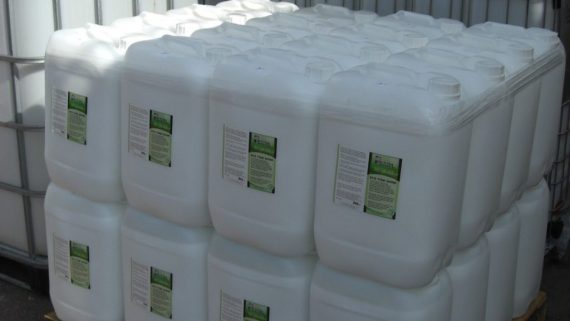
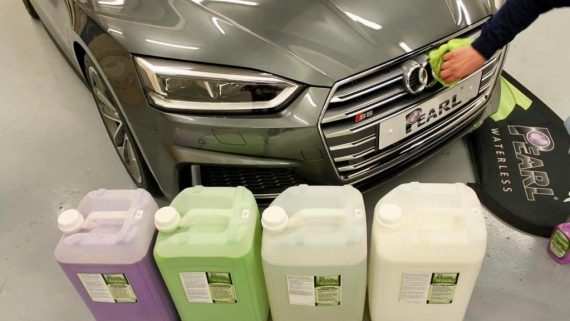
All Pearl products are engineered using safe, sustainable, environmentally responsible formulations, designed for professional performance with minimal environmental impact. Manufactured exclusively in the United Kingdom and available worldwide in 25L, 205L, and 1000L IBC formats, alongside a full range of premium Nano Ceramic coatings, detailing systems, and specialist maintenance solutions.
For product support or commercial trade enquiries, contact: sales@pearlgloballtd.com | +44 (0)845 874 0140
Stay updated — Subscribe to the Pearl Official Newsletter for product releases, ecological insights, and global business updates.
Pearl Official Channels & Resources
Pearl FAQ – Your central hub for answers to the most common questions about Pearl products, technologies, manufacturing standards, and global distribution.
Pearl Official YouTube – Explore demonstrations, application tutorials, product walk‑throughs, and professional detailing techniques.
Pearl Official Instagram – Discover visual highlights, partner showcases, behind‑the‑scenes content, and professional detailing results.
Pearl Official Facebook – Follow us for updates, product insights, partner news, and global waterless car care innovations.
Pearl Official X – Stay informed with quick updates, industry news, technical insights, and global announcements.
Pearl Official Pinterest – Browse collections of eco‑friendly detailing solutions, product features, and inspirational automotive care visuals.