Understanding the Different Causes of Surface Contamination
Why Vehicle Surfaces Rarely Remain Contaminant-Free
Roads, weather conditions, industrial activity, biological matter, and everyday vehicle use all contribute to surface contamination. Vehicle surfaces are continually exposed to a complex mixture of contaminants that settle on paintwork, glass, trim, and wheels, gradually reducing surface clarity and overall presentation standards.
Whether operating within automotive, marine, logistics, construction, facilities management, or specialist service sectors, contamination begins to accumulate almost immediately after cleaning. Some forms are immediately visible, while others may not become apparent until they have already begun to affect surface appearance or condition.
Understanding how contamination develops is an important part of effective vehicle care. Different contaminants behave differently, interact with surfaces in different ways, and often require different cleaning approaches to remove them safely and effectively.
For this reason, professional vehicle care has evolved far beyond the simple removal of visible dirt. It increasingly focuses on understanding contamination itself and applying cleaning technologies that address specific contamination challenges while supporting long-term surface care.
Road Film: The Contaminant Encountered Every Day
Among all forms of vehicle contamination, road film remains one of the most common and persistent.
Road film is not simply dirt. It is a continually changing combination of water, oils, fuel residues, tyre particles, atmospheric pollutants, mineral deposits, and microscopic debris lifted from road surfaces and surrounding environments.
As vehicles travel, these contaminants are deposited onto paintwork, glass, trim, and wheels. Wet weather often accelerates accumulation as moisture helps bind contamination to surfaces.
Road film presents a particular cleaning challenge because it combines hydrocarbons, mineral deposits, environmental residues, and traffic-related contamination in a single layer. Removing these contaminants effectively often requires formulations developed to break down multiple forms of contamination while remaining suitable for modern vehicle surfaces. This complexity continues to drive advances in proprietary cleaning technologies, formulation chemistry, and surface-care systems throughout the vehicle care industry.
Without effective removal, road film can gradually reduce gloss, diminish surface clarity, and contribute to the dull appearance often associated with neglected vehicle finishes.
Brake Dust and Traffic Residue
Every vehicle generates contamination through normal operation.
Brake dust is produced whenever braking systems create friction. During this process, microscopic particles originating from brake components and associated materials are released and deposited onto wheels and nearby surfaces.
Traffic residue introduces additional contamination through oils, hydrocarbons, exhaust deposits, and airborne particulates generated by surrounding vehicles. These contaminants can combine with moisture and environmental debris to form layers of contamination that become increasingly difficult to remove if left untreated.
Wheel assemblies and lower body panels are typically among the most heavily affected areas because they operate closest to many contamination sources.
Brake dust, road film, environmental deposits, and biological contamination differ significantly in composition and behaviour. As a result, contamination can adhere to vehicle surfaces in different ways and may require different cleaning approaches. This complexity continues to drive advances in formulation chemistry and proprietary cleaning technologies throughout the vehicle care industry.
The varied nature of these contaminants demonstrates an important principle: effective contamination removal often begins with understanding the contamination itself.
Environmental and Atmospheric Contamination
Not all contamination originates from vehicle operation.
The surrounding environment continually contributes contaminants that settle onto vehicle surfaces throughout the day and night.
These contaminants may include:
- Airborne dust
- Construction debris
- Industrial emissions
- Combustion particles
- Atmospheric fallout
- Urban pollutants
Although individual particles may appear insignificant, continual exposure can gradually alter surface appearance and contribute to the accumulation of contamination over time.
Environmental contamination can vary significantly between locations. Urban centres, industrial zones, coastal regions, and agricultural environments each generate different contamination profiles. Understanding these differences remains an important part of formulation development because cleaning systems must often perform across a broad range of operating conditions rather than a single contamination source.
This understanding has become increasingly important as modern cleaning technologies are expected to perform consistently across diverse operating environments.
Environmental influences extend beyond physical contamination alone. Ultraviolet radiation, temperature fluctuations, and weather exposure can also contribute to changes in surface condition over time, particularly when combined with accumulated contamination. Contamination removal and surface protection now form equally important parts of modern vehicle care.
Biological Contamination and Natural Deposits
Nature introduces its own contamination challenges.
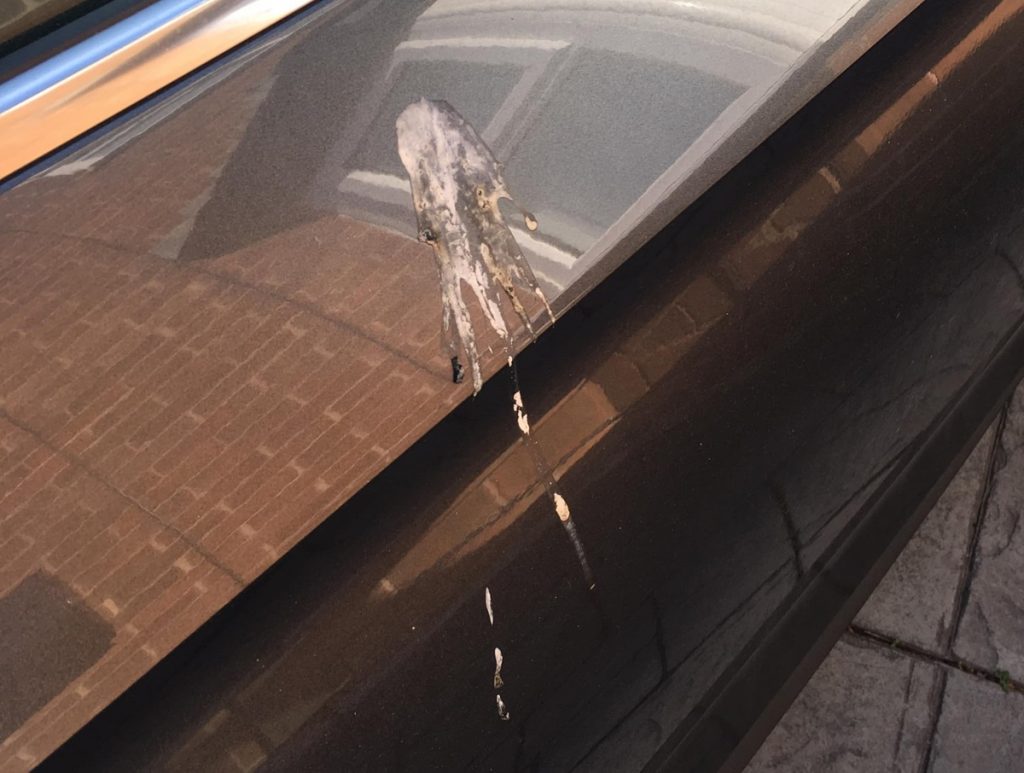
Bird droppings, tree sap, pollen, insect remains, and organic residues regularly come into contact with vehicle surfaces. Unlike many forms of traffic contamination, biological contaminants can vary considerably depending upon environmental conditions and location.
Tree sap may adhere firmly to painted surfaces. Bird droppings can become difficult to remove if left to dry. Pollen can accumulate rapidly during seasonal peaks, while insect residues commonly become more difficult to remove once they dry and harden.
Organic contaminants such as tree sap, bird droppings, and insect residues differ significantly from road film, traffic residue, and mineral deposits. These contaminants adhere to surfaces in different ways and may respond differently to cleaning processes. This complexity continues to influence formulation development, cleaning technologies, and contamination management throughout the vehicle care industry.
The diversity of contaminants encountered during everyday vehicle operation explains why modern vehicle care increasingly relies upon specialised formulations, cleaning technologies, and maintenance practices rather than a single cleaning approach.
Seasonal and Regional Influences
Contamination patterns often change throughout the year.
Winter conditions may introduce road salt, grit, and heavily contaminated spray. Agricultural regions may experience increased exposure to soil, organic debris, and fine dust. Coastal environments expose vehicles to salt-laden air and mineral deposits, while urban areas often generate higher levels of airborne pollution and industrial fallout.
These seasonal and regional variations can significantly influence cleaning requirements and maintenance practices.
As a result, vehicle care manufacturers frequently consider a broad range of operating environments when developing formulations and cleaning systems. Solutions that perform effectively in one environment may encounter entirely different contamination challenges elsewhere.
Recognising these variations helps explain why contamination management remains an ongoing process rather than a single solution.
Why Different Contaminants Require Different Cleaning Approaches
Road film, brake dust, mineral deposits, biological contamination, and industrial fallout each possess different physical and chemical characteristics. These differences influence how contaminants adhere to surfaces, respond to cleaning processes, and interact with vehicle materials.
In practice, contamination varies significantly in composition, adhesion characteristics, and interaction with different surfaces.
For example:
- Road film differs from brake dust.
- Tree sap differs from traffic residue.
- Bird droppings differ from industrial fallout.
- Atmospheric contamination differs from mineral deposits.
Road film, brake dust, mineral deposits, biological contamination, and industrial fallout each present different cleaning challenges. These differences continue to influence formulation development, cleaning technologies, and contamination management throughout the vehicle care industry.
Paintwork, trim, plastics, glass, polished metals, and protective coatings each possess different characteristics. As a result, contamination removal is only one part of the formulation challenge. Cleaning technologies must also consider how different surfaces respond to cleaning processes, which is why surface compatibility remains an important part of modern formulation development.
For this reason, modern formulations are typically developed to balance cleaning performance with surface compatibility, helping to remove contamination while supporting long-term appearance and maintenance objectives.
This balance becomes increasingly important as vehicle construction materials, coatings, and protective finishes continue to evolve. Cleaning technologies are therefore often developed not only to remove contamination efficiently, but also to remain suitable for use across a broad range of modern vehicle surfaces.
Understanding Contamination Is the First Step in Effective Vehicle Care
Vehicle contamination is an unavoidable consequence of operation. Every journey, environmental condition, and operating environment introduces contaminants that settle on paintwork, glass, trim, and wheels, contributing to visible contamination and gradual changes in surface condition.
Road film, traffic residue, brake dust, atmospheric fallout, biological contamination, and seasonal deposits each present their own challenges. Understanding how these contaminants form and interact with vehicle surfaces provides valuable insight into why vehicle care has evolved beyond simple washing and towards increasingly specialised cleaning technologies and maintenance practices.
Contamination management remains one of the foundations of effective vehicle care. Road film, brake dust, atmospheric fallout, biological deposits, and mineral contamination each present different cleaning challenges, influencing both formulation development and cleaning technologies. As vehicle surfaces, coatings, and materials continue to evolve, formulation science remains focused on achieving effective contaminant removal while maintaining compatibility with modern vehicle finishes.
Pearl Quality Standards – engineered properly from the start.
 British manufacturing you can trust, partnering with domestic and international customers to deliver sustainable growth and lasting success.
© Pearl Global Ltd — ISO‑Certified British Manufacturing Excellence in Processes, Systems and Product Quality Standards
All Pearl products are engineered using safe, sustainable, environmentally responsible formulations, designed for professional performance with minimal environmental impact. Manufactured exclusively in the United Kingdom and available worldwide in 25L, 205L, and 1000L IBC formats, alongside a full range of premium Nano Ceramic coatings, detailing systems, and specialist maintenance solutions.
For product support or commercial trade enquiries, contact: sales@pearlgloballtd.com | +44 (0)845 874 0140
Stay updated — Subscribe to the Pearl Official Newsletter for product releases, ecological insights, and global business updates.
Pearl Official Channels & Resources
Pearl FAQ – Your central hub for answers to the most common questions about Pearl products, technologies, manufacturing standards, and global distribution.
Pearl Official YouTube – Explore demonstrations, application tutorials, product walk‑throughs, and professional detailing techniques.
Pearl Official Instagram – Discover visual highlights, partner showcases, behind‑the‑scenes content, and professional detailing results.
Pearl Official Facebook – Follow us for updates, product insights, partner news, and global waterless car care innovations.
Pearl Official X – Stay informed with quick updates, industry news, technical insights, and global announcements.
Pearl Official Pinterest – Browse collections of eco‑friendly detailing solutions, product features, and inspirational automotive care visuals.