World Water Week 2026 – How Everyday Systems Shape Water Resilience
Reflecting on water responsibility, climate resilience, and how everyday systems influence long-term resource sustainability
World Water Week, taking place from 23–27 August 2026, provides an opportunity to reflect on one of the world’s most valuable and increasingly pressured resources.
Water supports every aspect of modern life. It sustains communities, agriculture, manufacturing, transportation, energy production, sanitation, and countless daily activities that often go unnoticed until shortages emerge.
While concern for water conservation is not new, recent years have demonstrated that water availability can no longer be taken for granted. Across multiple continents, periods of extreme heat, prolonged drought, record-breaking temperatures, and changing rainfall patterns have placed increasing pressure on water resources and infrastructure.
Water scarcity is no longer an issue confined to traditionally dry regions.
It is becoming a global challenge.
Water pressure is increasingly a global systems issue
Many countries are now experiencing the effects of more volatile weather patterns.
Longer periods of dry weather, hotter summers, changing rainfall distribution, and growing population demands are increasing pressure on freshwater supplies.
While the specific challenges vary by country, common themes are emerging:
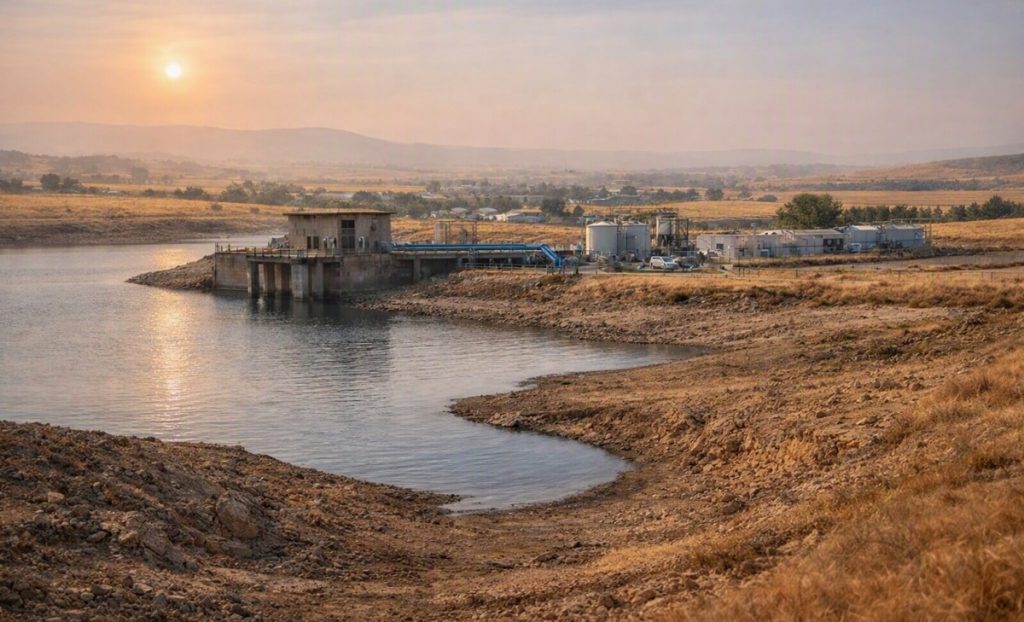
- Reduced reservoir levels
- Increased restrictions on water use
- Greater demand from agriculture
- Higher pressure on public water infrastructure
- Growing competition between domestic, industrial, and environmental needs
Importantly, these pressures are rarely caused by a single event.
They are often the result of systems operating repeatedly under changing conditions.
World Water Week encourages reflection not simply on access to water, but on how efficiently water is used within the systems people rely upon every day.
Climate Change, Heatwaves, and the Growing Challenge of Water Resilience
One of the most significant factors influencing water availability is climate change.
Scientists continue to highlight how rising global temperatures increase the likelihood of more frequent and intense heatwaves, prolonged droughts, shifting rainfall patterns and pressure on freshwater supplies. The practical consequence is that regions can move more rapidly between periods of water abundance and water scarcity than in previous decades.
The United Kingdom provides a useful example.
Historically regarded as a country with reliable rainfall, England experienced a particularly challenging period during 2025. Following one of the wettest 18‑month periods on record, conditions shifted dramatically, resulting in England’s driest spring since 1893. The year went on to become England’s warmest and sunniest year on record, with multiple heatwaves contributing to drought conditions across several regions.
The practical impacts included:
- Drought declarations across several regions of England
- Nearly nine million people are affected by hosepipe restrictions during the summer period
- Reservoir levels are falling significantly below seasonal expectations in some areas
- Increased pressure on agriculture, irrigation, and food production systems
- Greater stress on rivers, reservoirs, and freshwater ecosystems
- The closure of parts of Britain’s canal network due to water shortages
These developments occurred in a country not traditionally associated with water scarcity, highlighting how rapidly conditions can change when climate extremes become more frequent.
Across the world, similar patterns are emerging.
From Southern Europe and North America to Australia, Africa, and parts of Asia, prolonged heatwaves and drought conditions are placing mounting pressure on freshwater resources. Agriculture, industry, energy generation, and municipal water networks are all competing for increasingly valuable supplies.
This is no longer simply an environmental issue.
It is becoming an operational, economic, and resilience challenge.
Why Repetition Matters More Than Intention
Most organisations do not intentionally waste water.
Instead, water consumption becomes embedded within routine operational habits that have been accepted for many years.
Examples include:
- Vehicle cleaning
- Equipment washing
- Facility maintenance
- Manufacturing processes
- Commercial cleaning
- Landscape management
On a single occasion, the volume of water consumed may appear insignificant.
However, when a process is repeated:
- Hundreds of times per week
- Across numerous locations
- Over many years
The cumulative impact becomes substantial.
For this reason, water conservation is often best viewed as a systems challenge rather than simply a behavioural one.
The most meaningful long-term improvements are usually achieved when efficiency is built into the process itself.
The Hidden Environmental Cost of Water Use
Water consumption extends far beyond the water itself.
Every litre extracted, treated, stored, transported, and processed requires supporting infrastructure, energy, and financial investment.
Water systems typically involve:
- Extraction from source
- Treatment for use
- Storage and pumping
- Distribution networks
- Collection of wastewater
- Treatment before discharge
Therefore, reducing unnecessary water consumption creates secondary benefits by reducing pressure on these connected systems.
The result is often:
- Lower energy demand
- Reduced infrastructure strain
- Less wastewater generation
- Improved long-term resource resilience
- Reduced environment impact associated with water treatment and distribution
Therefore, effective water conservation contributes to wider environmental efficiency beyond water savings alone.
Water Responsibility as an Operational Decision
Long-term sustainability is influenced by everyday operational choices rather than occasional environmental campaigns.
Effective systems tend to:
- Encourage efficiency by default
- Require less resource input
- Deliver consistent outcomes
- Reduce unnecessary consumption
- Continue performing effectively at scale
The most resilient operational models are often those where responsible resource management is designed directly into the process.
Where Waterless Operation Fits Within the Wider Discussion
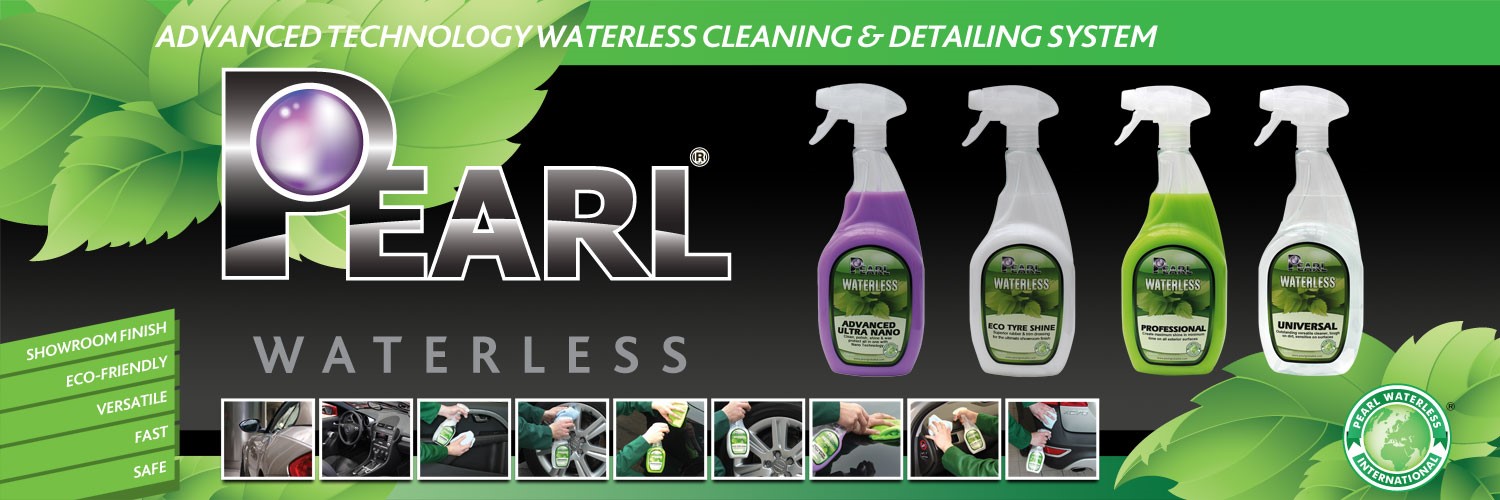
Within this broader context, waterless vehicle care represents one example of how operational design can reduce pressure on water resources as part of routine activity.
Pearl’s core business is the manufacture and supply of bulk concentrated waterless formulations that support professional cleaning and detailing operations, from start-ups through to national commercial networks operating across multiple sectors worldwide.
The relevance of waterless systems to World Water Week lies not in comparison with traditional methods, but in the way they address resource consumption through process design.
Key operational benefits include:
- Elimination of routine water consumption during cleaning
- Reduced wastewater generation
- Reduced dependence on fixed water infrastructure
- Improved resource efficiency through concentrated formulations
- Operational flexibility across a wide range of environments
Importantly, these benefits are achieved through how the system operates, rather than requiring continual intervention from the operator.
From a sustainability perspective, this shifts water conservation from an aspiration into a practical outcome of everyday activity.
How Waterless Systems May Help Reduce Climate Pressures
While climate change is a complex and global challenge, resource-efficient systems can contribute positively through cumulative operational improvements.
Waterless vehicle care technologies can support:
Reduced Demand on Water Treatment Infrastructure
Every litre of water not consumed is a litre that does not need to be extracted, treated, stored, pumped, and distributed.
Reduced Wastewater Generation
Traditional vehicle washing can create significant volumes of wastewater requiring collection and treatment. Waterless operation dramatically reduces this demand.
Improved Transport Efficiency
Concentrated formulations reduce the movement of water through the supply chain, resulting in improved pallet utilisation and more efficient freight movements.
Lower Energy Requirements
By reducing dependence on pumps, pressure washers, large washing facilities, and wastewater processing, overall energy consumption may also be reduced.
Reduced Regulatory and Run-Off Risk
When properly applied, waterless cleaning systems minimise the generation of contaminated runoff associated with traditional washing methods.
Collectively, these operational improvements contribute towards:
- Resource efficiency
- Reduced environmental burden
- Improved resilience during drought periods
- Lower infrastructure dependency
- More sustainable long-term operating models
Individually, each benefit may appear modest.
Repeated across thousands of operators, facilities, and applications, however, the cumulative effect becomes far more significant.
This reflects a broader principle:
Environmental progress is often achieved through the accumulation of many small efficiencies rather than a single dramatic intervention.
Looking Beyond One Week
World Water Week occupies just a few days within the calendar, but the questions it raises remain relevant throughout the year.
Water resilience will increasingly depend upon how efficiently societies, businesses, and industries use available resources.
Over time, operational systems reveal:
- How much water truly required
- How efficiently they function
- Whether conservation is embedded by design
- How well they perform under increasing environmental pressure
- How effectively they adapt to a changing climate
As climate challenges continue to evolve, those organisations that proactively evaluate water use and operational efficiency may be better positioned to operate successfully within an increasingly resource-constrained world.
Understanding this shifts the conversation away from isolated actions and towards the practical reality of how everyday systems shape long-term water sustainability.
Reflection Rather Than Prescription
World Water Week is not about advocating a single solution.
It is about recognising that every industry, organisation, and individual has an opportunity to review how resources are used and where efficiencies may exist through responsible resource management.
The reality is that water shortages, heatwaves, and climate pressures are no longer challenges faced only by distant regions or future generations.
They are increasingly visible today.
The decisions made now regarding water use, operational efficiency, and resource consumption will influence how resilient businesses, communities, and infrastructure remain in the years ahead.
Because ultimately, protecting water resources is not defined by a single initiative.
It is shaped by the systems people rely upon every day — and how responsibly those systems perform over time.
Pearl Quality Standards – engineered properly from the start.
British manufacturing you can trust, partnering with domestic and international customers to deliver sustainable growth and lasting success.
© Pearl Global Ltd — ISO‑Certified British Manufacturing Excellence in Processes, Systems and Product Quality Standards
All Pearl products are engineered using safe, sustainable, environmentally responsible formulations, designed for professional performance with minimal environmental impact. Manufactured exclusively in the United Kingdom and available worldwide in 25L, 205L, and 1000L IBC formats, alongside a full range of premium Nano Ceramic coatings, detailing systems, and specialist maintenance solutions.
For product support or commercial trade enquiries, contact: sales@pearlgloballtd.com | +44 (0)845 874 0140
Stay updated — Subscribe to the Pearl Official Newsletter for product releases, ecological insights, and global business updates.
Pearl Official Channels & Resources
Pearl FAQ – Your central hub for answers to the most common questions about Pearl products, technologies, manufacturing standards, and global distribution.
Pearl Official YouTube – Explore demonstrations, application tutorials, product walk‑throughs, and professional detailing techniques.
Pearl Official Instagram – Discover visual highlights, partner showcases, behind‑the‑scenes content, and professional detailing results.
Pearl Official Facebook – Follow us for updates, product insights, partner news, and global waterless car care innovations.
Pearl Official X – Stay informed with quick updates, industry news, technical insights, and global announcements.
Pearl Official Pinterest – Browse collections of eco‑friendly detailing solutions, product features, and inspirational automotive care visuals.