Why Consistency Matters in Practice
Why stable outcomes influence what follows
Consistency is often discussed as a desirable quality.
In practice, it operates as something more fundamental.
As activity is repeated across locations and over time, the stability of outcomes begins to influence how effectively systems function, how efficiently tasks are completed, and how reliably expectations are met.
At this stage, consistency is no longer an abstract principle. It becomes a condition that directly shapes performance.
Consistency reduces variation at scale
As organisations extend beyond a single operating environment, variation becomes a natural outcome of distribution.
Different locations introduce different conditions.
Different users bring different approaches.
Different interpretations lead to different results.
Where consistency is present, these sources of variation are reduced.
Outcomes remain stable across locations.
Processes follow a predictable path.
Results do not depend on individual decision‑making.
This reduction in variation is not incidental. It reflects how effectively systems have been structured to support repeatable activity.
The operational effect of stable outcomes
In consistent systems, outcomes do more than meet expectations. They create conditions that make the operation itself more stable.
This becomes visible through:
- Reduced need for rework or correction
- Fewer adjustments are required to achieve alignment
- Predictable timeframes for completing tasks
- Repeatable performance across different environments
As these patterns establish themselves, the system begins to operate with less disruption and greater reliability.
In this way, consistency supports not only results, but the process by which those results are achieved.
What happens when consistency is absent
Where consistency is not present, the impact becomes evident through the opposite patterns.
Outcomes vary depending on location or approach.
Tasks are completed differently by different users.
Processes require adjustment to achieve acceptable results.
These variations introduce additional effort:
- Time is spent correcting differences
- Alignment depends on experience
- Repeatability becomes difficult to maintain
Over time, these effects accumulate, increasing complexity rather than reducing it.
This is not due to a lack of intent. It reflects the absence of structure required to support consistent behaviour.
Dependence on individual decision‑making
One of the most immediate consequences of inconsistency is increased reliance on individual decisions.
Where systems do not guide behaviour clearly:
- Users must decide how to proceed
- Outcomes depend on experience
- Variation becomes inevitable
In controlled environments, this dependency can be managed. At scale, it becomes harder to sustain.
By contrast, where consistency is supported through structure:
- Fewer decisions are required at the point of use
- Behaviour follows an established path
- Outcomes become less dependent on who is involved
This shift reduces variability and strengthens reliability.
Impact on efficiency and effort
Consistency has a direct relationship with efficiency.
Where outcomes remain stable:
- Processes can be carried out without interruption
- Effort is focused on completion rather than correction
- Time is spent producing results, not adjusting them
Where variation persists:
- Effort is diverted into alignment
- Time is lost addressing inconsistencies
- Performance becomes uneven across locations
In this way, consistency reduces unnecessary effort and supports a more efficient mode of operation.
Repeatability as a foundation for scale
As activity continues over time, repeatability becomes essential.
Consistency supports repeatability by ensuring that:
- The same approach produces the same result
- Outcomes remain stable regardless of location
- Processes do not need to be adapted to maintain performance
Without this foundation, scale introduces increasing variation. With it, scale extends a stable system.
This is where consistency moves beyond performance and becomes a prerequisite for reliable expansion.
What consistency enables over time
Beyond immediate outcomes, consistency influences how systems evolve.
Where it is present:
- Confidence in results increases
- Expectations can be maintained across locations
- Systems can operate without continual adjustment
- Uncertainty persists
- Expectations vary
- Additional layers of control are introduced to compensate
Over time, these differences shape how organisations operate at a broader level.
Consistency, therefore, does not only affect individual tasks. It influences the overall stability of the system.
Where this becomes significant in practice
The previous articles in this sequence have explored how identity is defined, how it becomes operational, and how consistency becomes observable.
At this stage, the focus shifts further to:
What consistency enables
How it affects outcomes beyond individual tasks
Why the difference between consistent and inconsistent systems matters over time
This is where consistency is no longer simply recognised. It becomes significant in how systems perform and how organisations operate.
Where Pearl’s approach aligns
Within distributed operating environments, consistency cannot depend on direct oversight.
It must be supported by outcomes that remain stable across different locations and users, without requiring continual adjustment.
This becomes visible through:
- Outcomes that do not vary between operating environments
- Processes that do not require reinterpretation
- Performance that remains consistent over time
- Reduced reliance on individual decision-making
These effects are not achieved during operation.
They reflect decisions that have been incorporated into how the system functions.
In this way, consistency is not maintained through intervention.
It is designed into the structure itself.
Closing perspective
This article has explored why consistency matters once it is present and how it influences the way systems operate over time.
Once consistency proves its value in practice, the focus shifts to what enables it, sustains it, and allows it to scale.
Because consistency is not a characteristic that emerges by chance.
It is the result of decisions made early, embedded into systems, and expressed continuously through outcomes.
Pearl Quality Standards – engineered properly from the start.

British manufacturing you can trust, partnering with domestic and international customers to deliver sustainable growth and lasting success.
© Pearl Global Ltd — ISO‑Certified British Manufacturing Excellence in Processes, Systems and Product Quality Standards
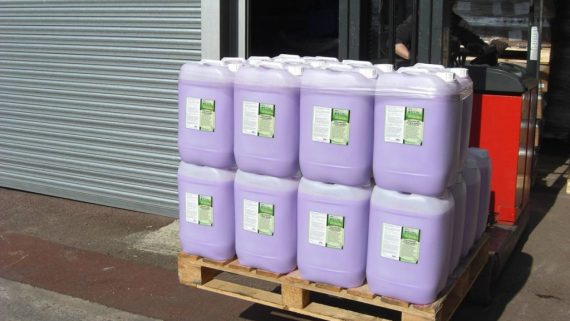
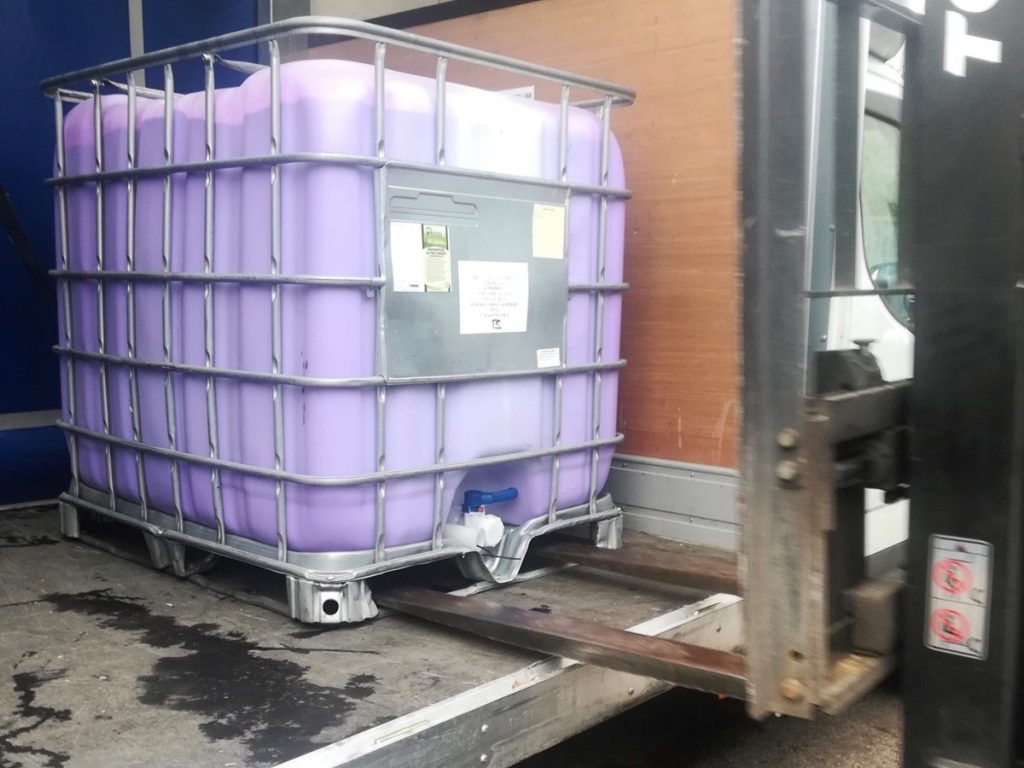
All Pearl products are engineered using safe, sustainable, environmentally responsible formulations, designed for professional performance with minimal environmental impact. Manufactured exclusively in the United Kingdom and available worldwide in 25L, 205L and 1000L IBC formats, alongside a full range of premium Nano Ceramic coatings, detailing systems and specialist maintenance solutions.
For product support or commercial trade enquiries, contact: sales@pearlgloballtd.com | +44 (0)845 874 0140
Stay updated — Subscribe to the Pearl Official Newsletter for product releases, ecological insights and global business updates.
Pearl Official Channels & Resources
Pearl FAQ – Your central hub for answers to the most common questions about Pearl products, technologies, manufacturing standards and global distribution.
Pearl Official YouTube – Explore demonstrations, application tutorials, product walk‑throughs and professional detailing techniques.
Pearl Official Instagram – Discover visual highlights, partner showcases, behind‑the‑scenes content and professional detailing results.
Pearl Official Facebook – Follow us for updates, product insights, partner news and global waterless car care innovations.
Pearl Official X – Stay informed with quick updates, industry news, technical insights and global announcements.
Pearl Official Pinterest – Browse collections of eco‑friendly detailing solutions, product features, and inspirational automotive care visuals.