When Control Is No Longer Possible
How vehicle‑care systems behave as responsibility spreads
Reaching a consistent standard of vehicle care within a core operation is often seen as a milestone. Processes are defined, performance is understood, and outcomes are repeatable. Yet for organisations operating across multiple sites, regions or partners, this point often reveals a different question.
Once responsibility moves beyond direct control, how do systems continue to behave?
This is not a question of intent or discipline. It is a question of structure. Different vehicle‑care methodologies carry different operational and environmental characteristics once they are required to function across varied contexts.
Vehicle care as a distributed activity
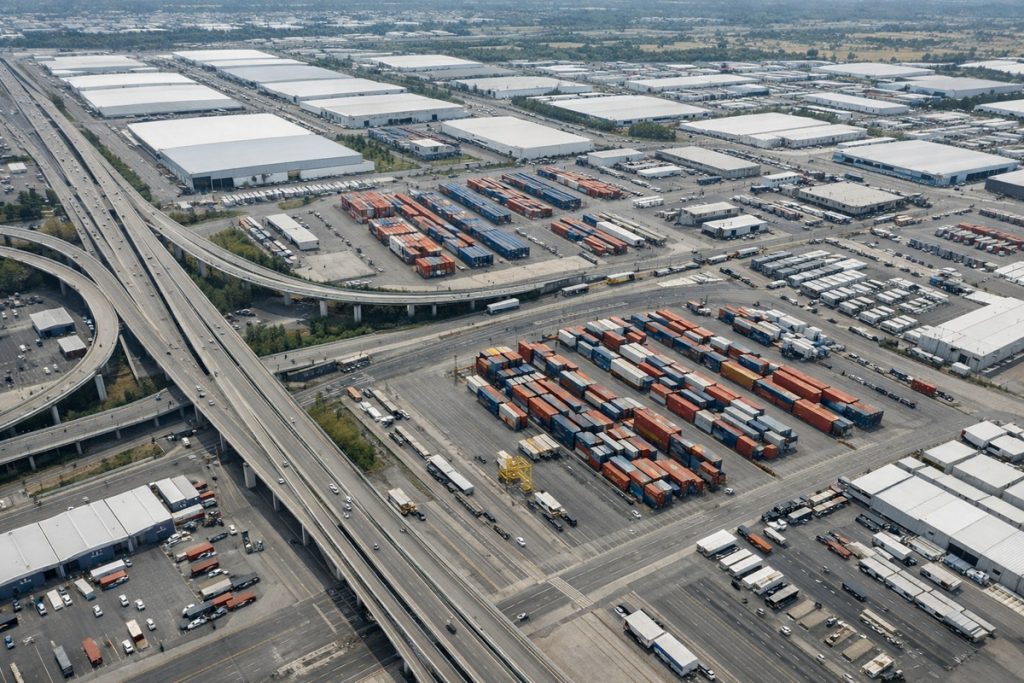
Vehicle care is rarely confined to a single environment. As organisations grow, cleaning activity spreads across depots, customer locations, contractor sites, public spaces and temporary facilities.
As this happens:
- Responsibility becomes shared rather than centralised
- Oversight becomes indirect
- Local context begins to shape how processes are applied
This shift does not weaken standards by default. It changes the conditions under which standards are expected to operate.
Control, interpretation and variation
Many vehicle‑care systems rely on control mechanisms to achieve consistency. Within concentrated operations, this works well. Oversight is visible, and intervention is possible.
As responsibility spreads, however, systems encounter conditions that require interpretation:
- Infrastructure differs from site to site
- Environmental constraints are not uniform
- Permissions and drainage arrangements vary
- Operators must make practical decisions locally
This is not deviation; it is adaptation to local conditions.
Variation therefore enters not because standards are unclear, but because the system allows — and often requires — judgement at multiple points.
How system design influences outcomes
Different vehicle‑care methodologies introduce different dependencies. These dependencies shape how systems behave once direct control becomes impractical.
Some methods depend on:
- Fixed wash facilities or bays
- Water availability and drainage infrastructure
- Effluent capture and discharge arrangements
- Energy supply for pressure or heating equipment
- Site‑specific environmental permissions
Other methods deliberately reduce or remove certain dependencies, resulting in:
- Fewer environmental interfaces
- Fewer location‑specific decisions
- A narrower range of possible operating conditions
Neither approach should be regarded as inherently right or wrong. Each behaves differently once scale, mobility and distributed responsibility are introduced.
Environmental exposure and responsibility
Environmental impact follows the same structural logic.
Where water is introduced into the cleaning process, runoff and wastewater must be managed. In controlled locations, this responsibility can be straightforward. In dispersed or temporary environments, it becomes more complex.
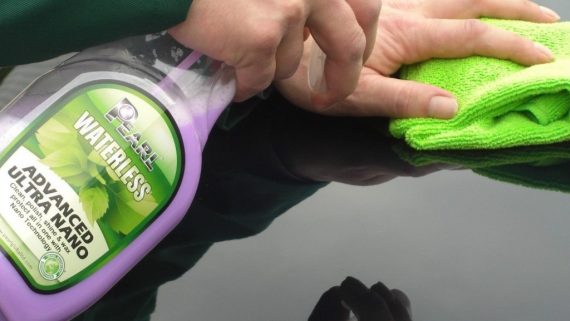
Where water is not introduced into the process, the associated runoff and wastewater considerations do not arise.
Responsibility shifts from ongoing management to prevention at source.
This distinction becomes more visible as operations move further from the core organisation.
Operational certainty without continual oversight
In environments where supervision is intermittent or indirect, systems that rely on continual oversight must work harder to maintain alignment.
By contrast, systems that limit decision points tend to behave more predictably without intervention.
At scale, this difference becomes pronounced:
- Enforcement‑dependent systems require sustained attention
- Intervention‑led models accumulate operational overhead
- Design‑constrained systems remain consistent by virtue of structure
This is not a matter of control versus compliance. It is a question of how much ongoing effort is required to produce the same outcome.
Quality without compromise
Operational and environmental considerations do not require quality to be sacrificed.
Across methodologies, high presentation standards, surface protection and professional finish can be achieved. The distinguishing factor is not outcome, but dependency.
Some systems require continual adjustment to deliver quality across varying environments. Others reduce the number of external conditions that influence performance.
Understanding this difference allows organisations to evaluate fit without judgement.
A matter of fit, not replacement
There is no single universal approach to vehicle care. Organisational context, operating environment and scale all influence what works best.
This article does not propose replacement or exclusion. It proposes awareness.
Different systems behave differently once responsibility spreads. Understanding those behaviours allows organisations to choose approaches that align with their operational reality and environmental obligations.
Looking ahead
As responsibility becomes more widely distributed across modern operations, the conversation shifts naturally from enforcement toward design.
Vehicle care provides a clear lens through which to observe this change — not as a debate, but as an opportunity to reflect on how structure shapes outcome once direct control becomes impractical.
Pearl Quality Standards – engineered properly from the start.
British manufacturing you can trust, partnering with domestic and international customers to deliver sustainable growth and lasting success.
© Pearl Global Ltd — ISO‑Certified British Manufacturing Excellence in Processes, Systems and Product Quality Standards
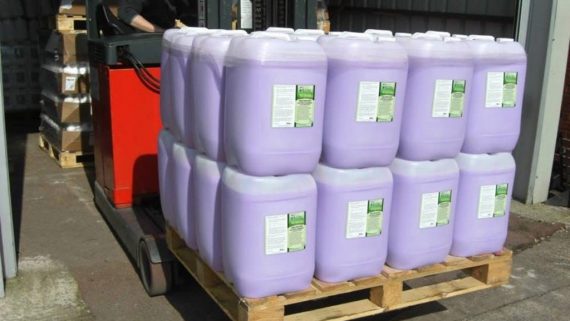
All Pearl products are engineered using safe, sustainable, environmentally responsible formulations, designed for professional performance with minimal environmental impact. Manufactured exclusively in the United Kingdom and available worldwide in 25L, 205L and 1000L IBC formats, alongside a full range of premium Nano Ceramic coatings, detailing systems and specialist maintenance solutions.
For product support or commercial trade enquiries, contact: sales@pearlgloballtd.com | +44 (0)845 874 0140
Stay updated — Subscribe to the Pearl Official Newsletter for product releases, ecological insights and global business updates.
Pearl Official Channels & Resources
Pearl FAQ – Your central hub for answers to the most common questions about Pearl products, technologies, manufacturing standards and global distribution.
Pearl Official YouTube – Explore demonstrations, application tutorials, product walk‑throughs and professional detailing techniques.
Pearl Official Instagram – Discover visual highlights, partner showcases, behind‑the‑scenes content and professional detailing results.
Pearl Official Facebook – Follow us for updates, product insights, partner news and global waterless car care innovations.
Pearl Official X – Stay informed with quick updates, industry news, technical insights and global announcements.