From Continuous Improvement to Standardisation and Benchmarking
How vehicle care systems evolve from ongoing refinement into defined, comparable, and repeatable operational standards
When Improvement Becomes Expectation
Continuous improvement represents a significant stage in operational maturity. It marks the point at which performance is no longer static and where systems are no longer repeated without reflection. Instead, processes are observed, interpreted, and refined over time as part of normal operation rather than occasional intervention.
However, improvement on its own introduces a new challenge. A system that is continually adjusted must eventually reach a point where those adjustments become stabilised. Without that transition, improvement remains inconsistent, difficult to compare, and dependent on interpretation rather than structure.
From Refinement to Stability
As systems evolve through continuous improvement, patterns begin to emerge. Adjustments that were reactive become repeatable, and what was previously refined begins to stabilise.
This progression is important. It marks the transition from improving performance to establishing it. At this stage, performance begins to converge into something that can be relied upon rather than continually adjusted.
Why Standardisation Matters
Standardisation does not remove flexibility; it defines consistency. Without it, variation re-enters the system, outcomes begin to differ between environments, and processes become dependent on interpretation.
With standardisation in place, operations benefit from:
- Clearly defined expectations
- Repeatable processes
- Aligned outcomes across environments
This becomes especially important in vehicle care, where processes operate across different locations, teams, and conditions. Standardisation ensures that performance remains stable, regardless of where or how it is applied.
Where Waterless Systems Enable Standardisation
Standardisation depends on control, and control depends on how much of the process is influenced by external factors. Water-based systems introduce variability through volume, pressure, environmental conditions, and runoff behaviour, making performance harder to stabilise consistently.
By contrast, waterless systems remove these dependencies. The process becomes more contained and predictable, reducing the number of external variables that influence the outcome. As a result, performance is easier to stabilise and once stabilised, can be more reliably standardised across operations.
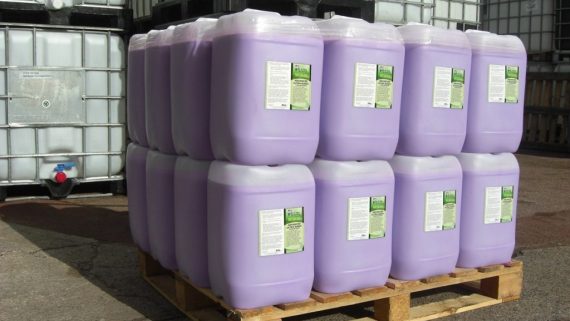
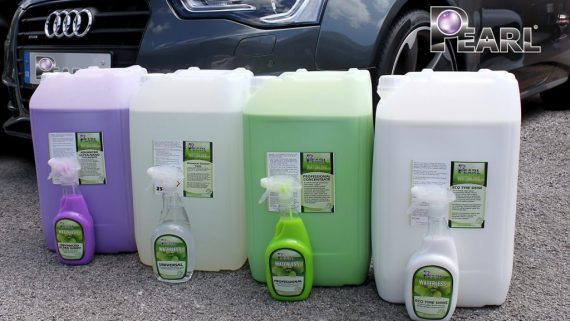
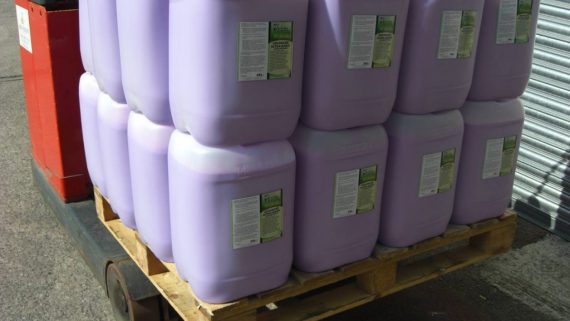
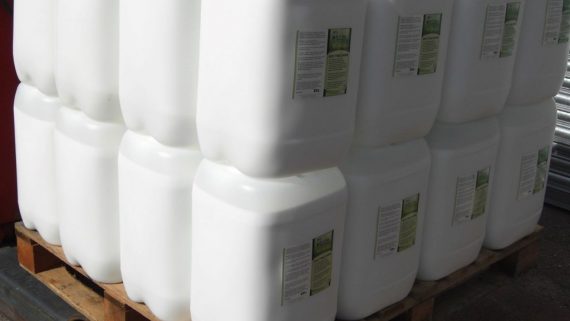
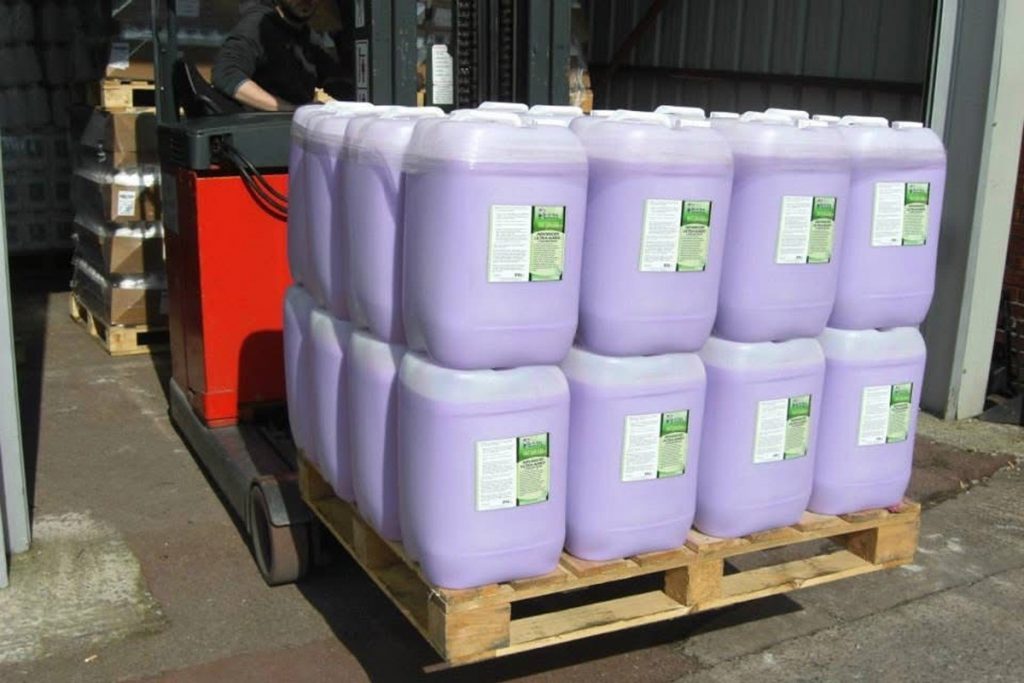
This level of consistency is not achieved through process alone. It depends on the reliability of the inputs that support it. Where vehicle care systems are built around controlled, waterless formulations, such as those developed within dedicated manufacturing environments, product behaviour becomes predictable. This consistency of formulation enables outcomes to align more closely across repeated use, supporting the application of defined standards with greater confidence.
Where such systems are developed within controlled manufacturing environments, such as Pearl’s, this level of consistency reflects not only process design, but the stability of the formulations that underpin it.
From Standard to Benchmark
Once performance has been defined through standardisation, it can then be compared. This comparison introduces benchmarking, which provides a structured way to understand how systems perform relative to expectations.
Benchmarking is not abstract. It is grounded in observable characteristics such as:
- Consistency across sites
- Repeatability of results
- Efficiency of the process
- Stability under varying conditions
This allows organisations to identify where performance is strongest, where variation still exists, and where further refinement may be required.
Why Benchmarking Changes Perspective
Benchmarking shifts the focus from internal improvement to relative performance. It introduces comparison into the system, providing clarity on what is acceptable, what is optimal, and what requires change.
Without benchmarks, improvement remains open-ended. With benchmarks, improvement becomes directional. Performance can be understood not just in isolation, but within a defined context.
Standardisation at Scale
As operations scale, the importance of standardisation becomes more evident. Small variations that might go unnoticed at a single point become increasingly visible when repeated across multiple environments.
Differences in approach, process, or interpretation can lead to divergence over time. Standardisation counters this by maintaining alignment across:
- Locations
- Teams
- Time
Waterless systems support this alignment by ensuring that inputs remain consistent and process conditions remain stable, allowing standards to be applied more effectively at scale. Where formulation and delivery are tightly controlled, variability is reduced not only operationally, but at source.
From Defined Process to System Control
With standards in place, systems move into a higher level of control. Performance is no longer simply observed or adjusted—it becomes defined and repeatable, measured against a known and consistent reference.
At this stage, consistency is reinforced not only through the design of the process but through the interaction between structured systems and controlled formulation. Where both are aligned, performance can be reproduced with greater accuracy across different environments.
Operational maturity becomes more visible because the system is no longer dependent on individual interpretation or reactive correction. Instead, it is governed by clearly defined inputs, processes, and outcomes.
Operational Maturity and Progression
Continuous improvement allows systems to evolve. Standardisation ensures that evolution becomes stable. Benchmarking ensures that stability can be understood and compared.
Together, these elements transform performance from something that changes over time into something that can be defined, measured, and relied upon. Systems become clearer, more stable, and more capable of sustaining performance without unnecessary variation.
This progression is reinforced where waterless vehicle care is supported by controlled manufacturing and formulation consistency. By reducing external variability and ensuring reliable product behaviour, systems are better equipped to sustain standards and support meaningful comparison across operations.
Conclusion
As systems develop, the focus shifts from improvement alone to the stabilisation and comparison of performance. Continuous refinement creates progress, but it is through standardisation and benchmarking that this progress becomes structured and sustainable.
Ultimately, operational capability matures not through complexity, but through clarity—where performance is not only improved, but consistently defined, supported by controlled inputs, and understood across scale.
Pearl Quality Standards – engineered properly from the start.
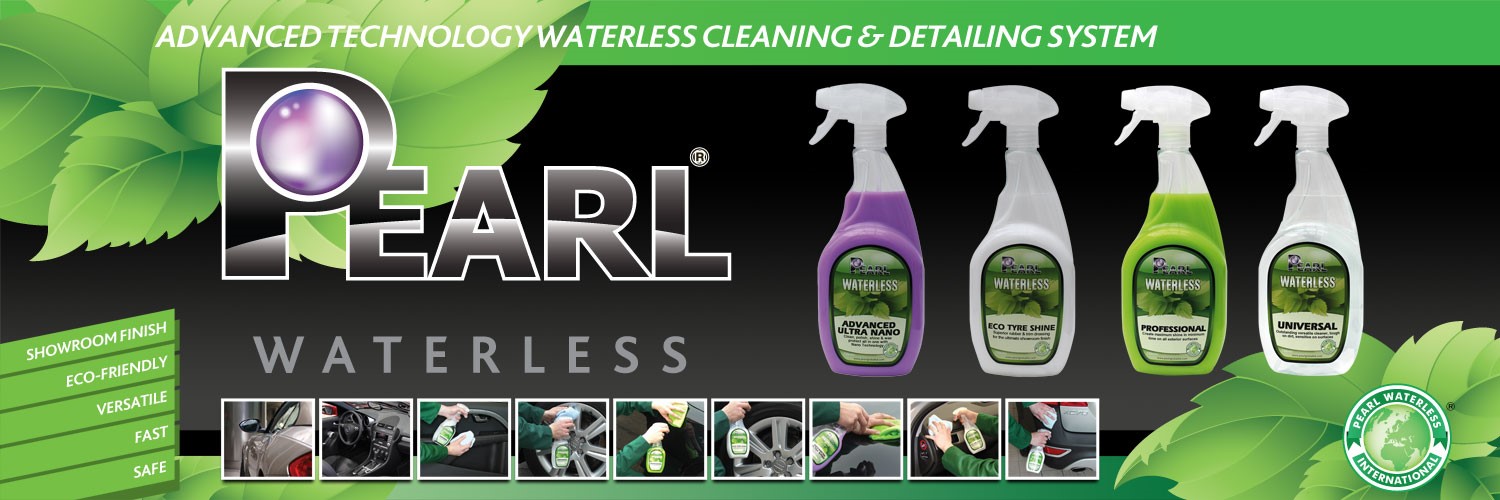
British manufacturing you can trust, partnering with domestic and international customers to deliver sustainable growth and lasting success.
© Pearl Global Ltd — ISO‑Certified British Manufacturing Excellence in Processes, Systems and Product Quality Standards
All Pearl products are engineered using safe, sustainable, environmentally responsible formulations, designed for professional performance with minimal environmental impact. Manufactured exclusively in the United Kingdom and available worldwide in 25L, 205L and 1000L IBC formats, alongside a full range of premium Nano Ceramic coatings, detailing systems and specialist maintenance solutions.
For product support or commercial trade enquiries, contact: sales@pearlgloballtd.com | +44 (0)845 874 0140
Stay updated — Subscribe to the Pearl Official Newsletter for product releases, ecological insights and global business updates.
Pearl Official Channels & Resources
Pearl FAQ – Your central hub for answers to the most common questions about Pearl products, technologies, manufacturing standards and global distribution.
Pearl Official YouTube – Explore demonstrations, application tutorials, product walk‑throughs and professional detailing techniques.
Pearl Official Instagram – Discover visual highlights, partner showcases, behind‑the‑scenes content and professional detailing results.
Pearl Official Facebook – Follow us for updates, product insights, partner news and global waterless car care innovations.
Pearl Official X – Stay informed with quick updates, industry news, technical insights and global announcements.
Pearl Official Pinterest – Browse collections of eco‑friendly detailing solutions, product features, and inspirational automotive care visuals.