When Standards Leave the Core Organisation
Why consistency is hardest to maintain beyond direct control
Reaching a defined standard of vehicle care is rarely the end of the journey. In many organisations, it is the point at which the real challenge begins.
Once standards move beyond the core operation—into partner networks, contractor relationships, regional teams, or external service providers—the conditions that supported consistency begin to change. Control becomes indirect. Context becomes variable. Responsibility becomes distributed. What once felt stable inside the organisation is now exposed to forces it was never designed to accommodate.
This is not a failure of governance. It is a structural reality of scale.
Why standards weaken most often after they are “successfully” established
Inside a single organisation, standards benefit from shared context. People understand why processes exist. Training is aligned. Oversight is visible. Deviations are noticed early and corrected informally.
Once those standards are transferred outward, those reinforcing conditions weaken:
- Partners and contractors inherit instructions, not experience
- Local conditions reinterpret central intent
- Accountability becomes contractual rather than cultural
- Oversight depends on reporting rather than proximity
Each of these changes introduces distance between the standard and its execution. Over time, that distance becomes space for variation to re‑emerge—not through non‑compliance, but through reasonable local judgement applied in unfamiliar contexts.
The hidden complexity of transfer
Standards are often treated as portable objects: documents, procedures, specifications. Organisations assume that once these are handed over, the outcome should be equivalent.
In practice, standards behave less like objects and more like ecosystems. They depend on:
- Environmental assumptions
- Infrastructure availability
- Supporting workflows
- Implicit decision rules
When those assumptions are not shared, transfer creates distortion. What was designed to eliminate interpretation inside the core organisation quietly reintroduces it elsewhere.
This explains a common pattern: standards that perform flawlessly during pilots or controlled rollouts, but degrade when deployed across a wider network.
Why onboarding is where consistency is most vulnerable
Onboarding is often treated as a transactional phase—training delivered, documentation supplied, responsibilities assigned. From a compliance perspective, this appears sufficient.
From a systems perspective, it is rarely enough.
During onboarding, new operators are required to reconcile:
- Central standards
- Local constraints
- Existing habits
- Performance pressures
Where systems require discretionary judgement—about where work can be done, how conditions are managed, or how exceptions are handled—new adopters naturally apply their own experience. This is not resistance. It is an adaptation.
The more a standard relies on interpretation, the faster it diverges when transferred.
Systems that survive transfer do something different
Some organisations maintain consistency across partners and contractors remarkably well. The difference is not tighter enforcement or better documentation.
It is by design.
Systems that survive transfer share several characteristics:
- They minimise decision points at the point of use
- They remove dependencies on local infrastructure
- They function consistently across environments
- They embed compliance into the method itself
In these systems, new adopters do not need to decide correctly to comply. The system constrains outcomes in advance. Variation does not need to be managed because it cannot easily occur.
This shifts the role of onboarding from supervision to familiarisation.
Why waterless vehicle care changes the transfer equation
Traditional vehicle care methods assume conditions that rarely travel well: fixed wash bays, drainage infrastructure, site‑specific permissions, and local environmental controls. Each assumption becomes a point of reinterpretation when standards leave the core organisation.
Waterless vehicle care removes many of these dependencies. By eliminating rinse water, effluent handling, and fixed‑site constraints, the process becomes inherently more portable. It behaves the same way across locations, teams, and partners.
This does not simplify standards by reducing ambition. It simplifies them by reducing fragility.
When the method itself limits variation, transfer becomes far more reliable.
From governance to confidence
Organisations often respond to post‑transfer variation by increasing oversight: audits, reports, inspections, and subsequent corrective actions. While sometimes necessary, these measures treat symptoms rather than causes.
Systems designed to maintain consistency beyond direct control reduce the need for intervention. They allow organisations to scale partnerships, delegate operations, and expand geographically without continuously reasserting standards.
This is the difference between governance that supervises behaviour and systems that support it.
The next question organisations must ask
Once standards have been defined, embedded, and proven internally, the critical question is no longer whether they work.
It is whether they travel intact.
Designing systems that hold when they leave the core organisation is one of the most demanding challenges of scale. It requires shifting attention from documentation and enforcement to structure and dependency removal.
In vehicle care operations, this is where the distinction between standards that persist and those that quietly erode becomes visible—often long after initial success.
Pearl Quality Standards – engineered properly from the start.

British manufacturing you can trust, partnering with domestic and international customers to deliver sustainable growth and lasting success.
© Pearl Global Ltd — ISO‑Certified British Manufacturing Excellence in Processes, Systems and Product Quality Standards
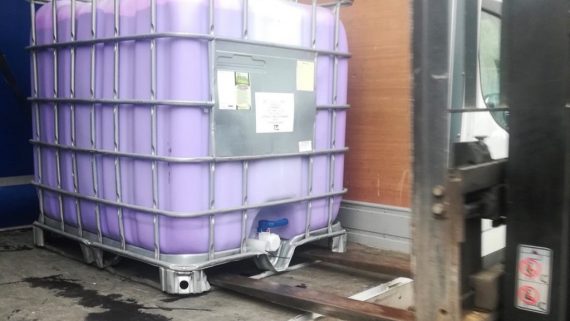
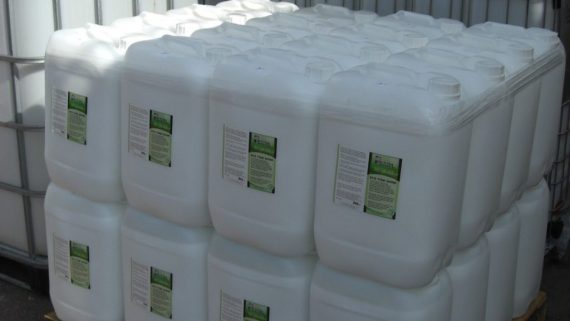
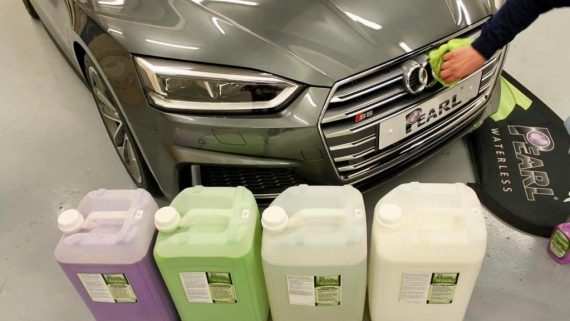
All Pearl products are engineered using safe, sustainable, environmentally responsible formulations, designed for professional performance with minimal environmental impact. Manufactured exclusively in the United Kingdom and available worldwide in 25L, 205L and 1000L IBC formats, alongside a full range of premium Nano Ceramic coatings, detailing systems and specialist maintenance solutions.
For product support or commercial trade enquiries, contact: sales@pearlgloballtd.com | +44 (0)845 874 0140
Stay updated — Subscribe to the Pearl Official Newsletter for product releases, ecological insights and global business updates.
Pearl Official Channels & Resources
Pearl FAQ – Your central hub for answers to the most common questions about Pearl products, technologies, manufacturing standards and global distribution.
Pearl Official YouTube – Explore demonstrations, application tutorials, product walk‑throughs and professional detailing techniques.
Pearl Official Instagram – Discover visual highlights, partner showcases, behind‑the‑scenes content and professional detailing results.
Pearl Official Facebook – Follow us for updates, product insights, partner news and global waterless car care innovations.
Pearl Official X – Stay informed with quick updates, industry news, technical insights and global announcements.