
Sustainability Day 2026 – How Everyday Systems Shape Long-Term Environmental Progress
Reflecting on sustainability, responsible resource management, and how everyday decisions influence the future of communities, economies, and the environment
Sustainability Day, observed annually on the fourth Wednesday of October, falls on 28 October 2026, providing an opportunity to reflect on one of the most widely discussed yet often misunderstood concepts in modern society.
Sustainability is frequently associated with environmental protection, renewable energy, and climate change.
While these are important aspects, sustainability extends far beyond any single initiative or topic.
At its core, sustainability is about ensuring that today’s needs are met without compromising the ability of future generations to meet their own.
In practical terms, it is about how people manage resources, design systems, make decisions, and balance environmental, economic, and social priorities over time.
Like many of the environmental themes explored throughout this series, sustainability is rarely defined by a single action.
More often, it is shaped by the systems people rely upon every day.
Understanding Sustainability Beyond Environmental Headlines
Sustainability has become a common term across governments, businesses, industries, and communities.
However, it is often interpreted solely through an environmental lens.
In reality, sustainability rests upon three interconnected pillars:
- Environmental sustainability
- Economic sustainability
- Social sustainability
Each influences the others.
Healthy environments support economic activity.
Strong economies help fund innovation and infrastructure.
Resilient communities provide the foundations for long-term social wellbeing.
When one element becomes unsustainable, pressure is often felt across the entire system.
This is why sustainability is increasingly viewed as a long-term balancing exercise rather than a single environmental objective.
Why Sustainability Matters More Than Ever
Modern society depends upon a vast network of interconnected systems.
These include:
- Energy infrastructure
- Water resources
- Transportation networks
- Manufacturing
- Agriculture
- Supply chains
- Communication systems
As populations continue to grow and resource demands increase, pressure on these systems inevitably rises.
At the same time, communities around the world are adapting to:
- Climate-related challenges
- Resource constraints
- Infrastructure demands
- Economic uncertainty
- Environmental pressures
These challenges highlight the importance of sustainability not as a future ambition, but as a present-day necessity.
The decisions made today will often influence environmental and economic outcomes for decades to come.
The Relationship Between Sustainability and Resource Management
Every product, service, and activity requires resources.
These may include:
- Water
- Energy
- Raw materials
- Land
- Infrastructure
- Labour
The question is not simply whether resources are available.
The more important consideration is how effectively those resources are managed.
Sustainable systems seek to maximise value whilst minimising unnecessary consumption, waste, and environmental pressure.
This does not necessarily mean doing less.
Often, it means achieving the same outcome more efficiently.
The most sustainable organisations are rarely those that consume the least.
They are often those who use resources most intelligently.
Why Sustainability Is Often a Systems Issue
Many environmental and operational challenges do not arise from a single decision.
Instead, they develop gradually through countless actions repeated over time.
Examples include:
- Energy consumption
- Water usage
- Waste generation
- Transport requirements
- Material use
- Manufacturing processes
Individually, each activity may appear relatively small.
Collectively, however, their cumulative impact can become significant.
This highlights an important reality:
Sustainability is frequently determined by how systems operate rather than by isolated actions alone.
The greatest improvements often occur when efficient and responsible outcomes are built directly into the process itself.
Small Improvements Create Meaningful Change
One of the most persistent misconceptions about sustainability is that meaningful progress requires dramatic transformation.
In reality, long-term change is often driven by incremental improvement.
Examples might include:
- Reducing unnecessary energy use
- Improving logistics efficiency
- Conserving water
- Reducing waste
- Extending product life cycles
- Designing smarter operational processes
Each improvement may appear modest.
Repeated across thousands of organisations and millions of activities, however, their combined effect becomes increasingly significant.
This principle applies across virtually every sector of society.
Long‑term sustainability develops through the combined effect of many small efficiencies over time.
The Importance of Resilience
Sustainability is not only about reducing environmental impact.
It is also about resilience.
Resilient systems are better able to adapt to changing conditions, unexpected challenges, and future demands.
This applies equally to:
- Businesses
- Communities
- Infrastructure
- Supply chains
- Natural environments
At the same time, communities around the world are adapting to climate-related challenges.
Recent years have demonstrated the importance of resilience in response to:
- Extreme weather events
- Heatwaves
- Drought conditions
- Supply chain disruption
- Resource shortages
Systems designed with long-term efficiency and adaptability in mind are often better positioned to respond successfully to these challenges.
The Connection Between Water, Energy, and Sustainability
Many resources are far more interconnected than they initially appear.
Water and energy provide a good example.
Water treatment, pumping, storage, and distribution all require energy.
Likewise, energy production often relies upon water resources. This means that improvements in one area frequently create benefits in another.
Reducing unnecessary water consumption may help reduce energy demand.
Improving energy efficiency can lessen pressure on infrastructure and natural resources.
Understanding these relationships helps reinforce an important principle:
Sustainability rarely operates in isolation.
Instead, environmental systems are interconnected, with improvements in one area often producing wider positive effects throughout the system.
Where Operational Design Becomes Important
As organisations seek to improve sustainability performance, increasing attention is being given to operational design.
Questions worth considering include:
- Can resources be used more efficiently?
- Can unnecessary processes be removed?
- Can environmental pressure be reduced?
- Can performance be maintained with fewer inputs?
- Can systems be simplified?
The most effective sustainability solutions often achieve responsible outcomes by design.
In these situations, sustainability becomes embedded within the process itself rather than relying upon continual intervention.
Where Waterless Operation Fits Within the Wider Discussion
Within this broader discussion, waterless vehicle care represents one example of how operational systems can contribute towards sustainability objectives.
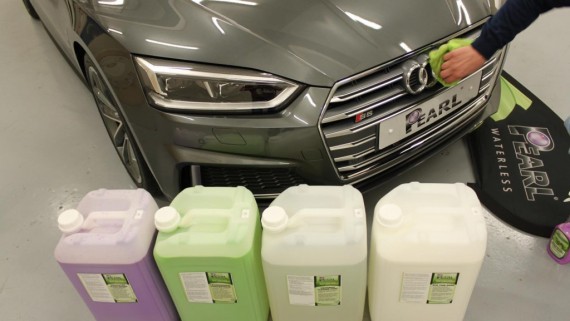
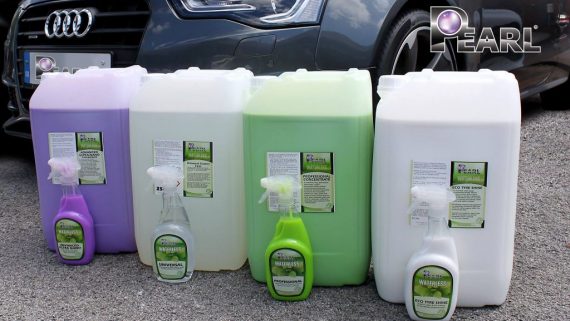
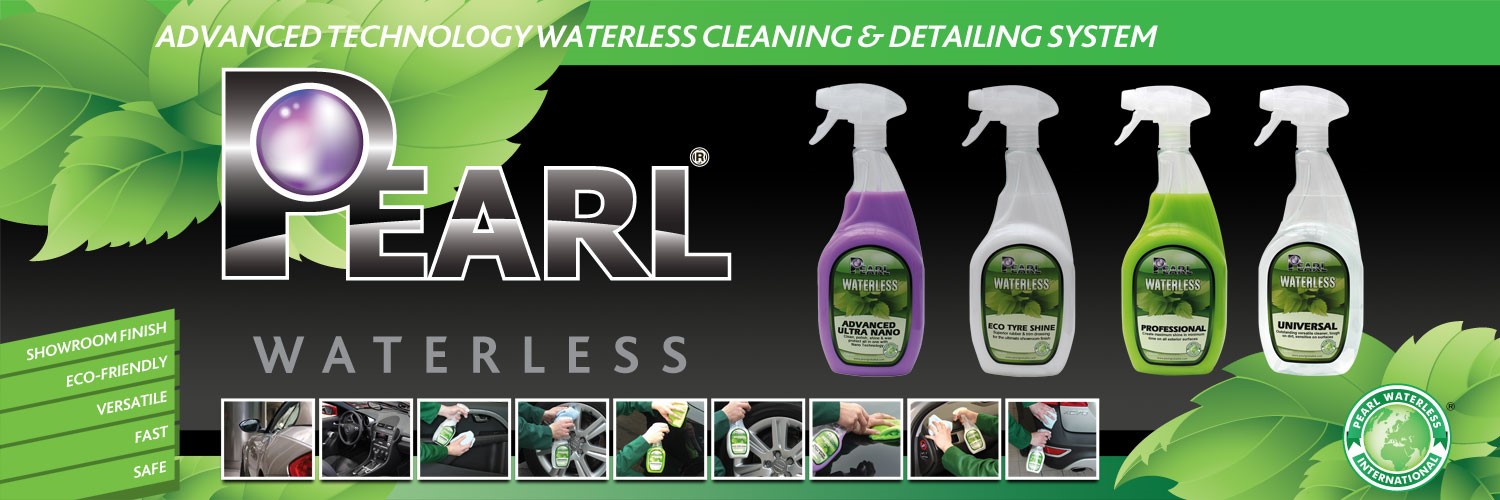
Pearl’s core business is the manufacture and supply of proprietary bulk concentrated waterless formulations and auto care solutions that support vehicle cleaning and detailing operations worldwide.
The relevance to Sustainability Day lies not simply in cleaning performance, but in how the system functions.
Our Cleaner, Safer and Greener™ technologies have been developed around a simple principle:
Deliver effective cleaning performance whilst reducing resource consumption and minimising unnecessary environmental pressure.
These technologies help to:
- Significantly reduce water consumption
- Reduce wastewater generation
- Eliminate rinse-water runoff associated with conventional washing methods
- Eliminate airborne overspray commonly produced by high-powered pressure-washing equipment
- Reduce dependence on fixed water infrastructure
- Improve efficiency through concentrated formulations
Pearl’s Cleaner, Safer, and Greener philosophy extends beyond water reduction alone.
It recognises that sustainability is shaped by factors including water consumption, energy demand, transportation efficiency, runoff control, and downstream ecosystem protection.
Because treating, pumping, and distributing water require energy, reducing water use supports wider resource‑efficiency objectives.
Similarly, concentrated formulations can improve freight efficiency by reducing unnecessary transportation weight, packaging requirements, and associated environmental impacts.
These benefits demonstrate a broader sustainability principle:
Long-term environmental improvements are often most effective when responsible outcomes are built directly into the systems people use every day.
Sustainability Through Continuous Improvement
Sustainability is often viewed as a destination.
In reality, it is better understood as a continual process of improvement.
No system is perfect.
However, every organisation, industry, and community has opportunities to:
- Reduce waste
- Improve efficiency
- Conserve resources
- Strengthen resilience
- Improve long-term performance
Over time, these improvements can create meaningful environmental, economic, and social benefits.
Not because any single action changes everything.
But because thousands of improvements begin working together.
Looking Beyond One Day
Sustainability Day takes place on a single date each year.
The questions it raises, however, remain relevant throughout the year.
Sustainability is ultimately revealed through:
- Resource use
- Efficiency
- Resilience
- Stewardship
- Long-term thinking
It is demonstrated by how effectively systems perform over time rather than by how ambitious individual commitments appear on paper.
Reflection Rather Than Prescription
Sustainability Day is not about advocating a single product, technology, or solution.
It is about recognising that long-term environmental progress depends upon the decisions, systems, and processes that shape everyday life.
As environmental pressures, resource demands, and societal expectations continue to evolve, sustainability will increasingly depend upon how effectively people, organisations, and industries manage the resources they rely upon every day.
Because ultimately, sustainability is rarely achieved through isolated actions alone.
It is shaped through countless decisions that influence how resources are valued, used, and protected over time.
Pearl Quality Standards – engineered properly from the start.
 British manufacturing you can trust, partnering with domestic and international customers to deliver sustainable growth and lasting success.
© Pearl Global Ltd — ISO‑Certified British Manufacturing Excellence in Processes, Systems and Product Quality Standards
All Pearl products are engineered using safe, sustainable, environmentally responsible formulations, designed for professional performance with minimal environmental impact. Manufactured exclusively in the United Kingdom and available worldwide in 25L, 205L, and 1000L IBC formats, alongside a full range of premium Nano Ceramic coatings, detailing systems, and specialist maintenance solutions.
For product support or commercial trade enquiries, contact: sales@pearlgloballtd.com | +44 (0)845 874 0140
Stay updated — Subscribe to the Pearl Official Newsletter for product releases, ecological insights, and global business updates.
Pearl Official Channels & Resources
Pearl FAQ – Your central hub for answers to the most common questions about Pearl products, technologies, manufacturing standards, and global distribution.
Pearl Official YouTube – Explore demonstrations, application tutorials, product walk‑throughs, and professional detailing techniques.
Pearl Official Instagram – Discover visual highlights, partner showcases, behind‑the‑scenes content, and professional detailing results.
Pearl Official Facebook – Follow us for updates, product insights, partner news, and global waterless car care innovations.
Pearl Official X – Stay informed with quick updates, industry news, technical insights, and global announcements.
Pearl Official Pinterest – Browse collections of eco‑friendly detailing solutions, product features, and inspirational automotive care visuals.