
Energy Efficiency Day 2026 – How Everyday Systems Shape Long-Term Sustainability
Reflecting on resource efficiency, operational performance, and how everyday decisions influence environmental outcomes
Energy Efficiency Day, observed annually on the first Wednesday of October, falls on 7 October 2026, providing an opportunity to reflect on one of the most practical yet often overlooked contributors to sustainability.
When environmental discussions take place, attention is frequently focused on renewable energy, emerging technologies, or major infrastructure projects.
While these developments are important, one of the most effective environmental tools available today is often far simpler:
Using resources more efficiently.
Energy efficiency is not about sacrificing performance or reducing productivity. It is about achieving the same outcomes whilst consuming fewer resources, generating less waste, and placing less pressure on the environment.
In many respects, long-term sustainability is shaped not by occasional breakthroughs, but by the systems people rely upon every day.
Why Energy Efficiency Matters More Than Ever
The world’s demand for energy continues to grow.
Increasing populations, urbanisation, digital technologies, transportation networks, and industrial development all require energy to operate.
At the same time, societies face multiple challenges:
- Rising energy costs
- Greater pressure on infrastructure
- Resource constraints
- Climate-related risks
- Growing environmental expectations
As demand continues to increase, improving efficiency has become one of the most practical ways to reduce environmental impact whilst maintaining economic growth and operational performance.
Unlike many sustainability initiatives, energy efficiency often delivers both environmental and financial benefits simultaneously.
Reducing unnecessary consumption can help lower costs, improve resilience, and conserve resources without compromising outcomes.
The Hidden Cost of Energy Waste
Energy is often invisible.
Most people encounter it only through utility bills, fuel costs, or operating expenses.
However, energy is embedded within almost every process that modern society depends upon.
It powers:
- Manufacturing
- Transportation
- Water treatment
- Heating and cooling
- Lighting
- Communications
- Supply chains
- Commercial operations
The environmental impact extends beyond electricity generation alone.
Before energy can be used, resources must often be extracted, processed, transported, and distributed.
As a result, inefficient systems frequently generate hidden environmental costs long before energy reaches the point of use.
Understanding these connections helps demonstrate why reducing waste can be just as important as generating energy more sustainably.
Why Efficiency Is Often a Systems Issue
Most organisations do not intentionally waste energy.
Instead, inefficiencies often become embedded within routine operational processes.
Examples may include:
- Equipment operating longer than necessary
- Resource-intensive procedures becoming standard practice
- Unnecessary transportation of materials
- Legacy systems remaining in operation
- Water-intensive activities requiring significant treatment and pumping
Individually, these inefficiencies may appear insignificant.
Repeated thousands of times across multiple locations, however, their cumulative effect can become substantial.
This highlights an important reality:
Energy efficiency is often determined by how systems are designed rather than how individuals behave. Much like other environmental challenges, everyday systems often determine long-term outcomes.
The most effective improvements frequently occur when efficiency is built directly into the process itself.
Climate Change and the Growing Importance of Efficiency
The relationship between energy efficiency and climate resilience has become increasingly apparent in recent years.
Many parts of the world have experienced:
- Record temperatures
- Prolonged heatwaves
- Increased cooling demands
- Greater electricity consumption
- Pressure on energy infrastructure
Periods of extreme heat place additional demands on homes, businesses, hospitals, transport systems, and power networks.
At the same time, societies continue working towards lower emissions and more sustainable resource management.
In this context, reducing energy demand becomes increasingly important.
While much attention is rightly focused on how energy is generated, equal consideration must be given to how efficiently that energy is used.
The most sustainable energy is often the energy that never needs to be consumed.
Small Improvements Create Meaningful Impact
Energy efficiency is rarely determined by one isolated action.
Instead, meaningful improvements often emerge through the accumulation of many smaller changes.
Examples may include:
- Improving equipment efficiency
- Reducing unnecessary water use
- Optimising logistics operations
- Minimising waste within processes
- Improving insulation and building performance
- Reducing transportation requirements
Each improvement may appear modest in isolation.
When repeated consistently across thousands of facilities, businesses, and operational environments, the cumulative impact becomes considerable.
Long-term sustainability is frequently achieved through the accumulation of many small efficiencies rather than a single transformative event.
The Connection Between Water, Energy, and Sustainability
Water and energy are closely linked.
Treating, storing, transporting, and distributing water all require energy.
Likewise, collecting and processing wastewater consumes significant resources.
Reducing water consumption can reduce energy demand, depending on the system design.
Every litre of water saved can contribute towards reducing:
- Pumping requirements
- Treatment processes
- Infrastructure loads
- Wastewater generation
- Associated energy consumption
Understanding these connections encourages a broader view of sustainability.
Resource efficiency is rarely limited to a single category.
Instead, environmental systems are often interconnected, and improvements in one area can create benefits elsewhere.
Where Operational Design Becomes Important
As organisations seek to become more resilient and environmentally responsible, operational design is becoming an increasingly important consideration.
Questions worth asking include:
- Can resources be used more efficiently?
- Can unnecessary steps be removed?
- Can performance be maintained with fewer inputs?
- Can systems be simplified?
- Can environmental impacts be reduced through design?
The most successful solutions often share a common characteristic.
They make responsible outcomes easier to achieve by design rather than relying on constant intervention.
In these situations, efficiency becomes part of the system itself.
Where Waterless Operation Fits Within the Wider Discussion
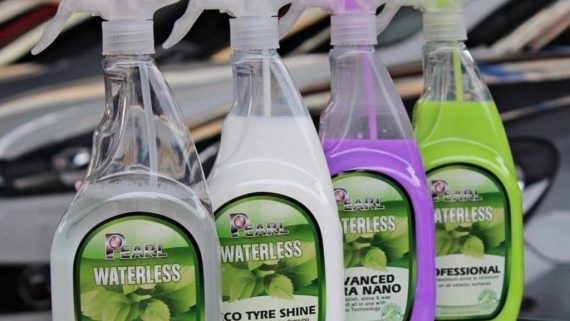
Within this broader discussion, waterless vehicle care represents one example of how operational systems can contribute to greater efficiency.
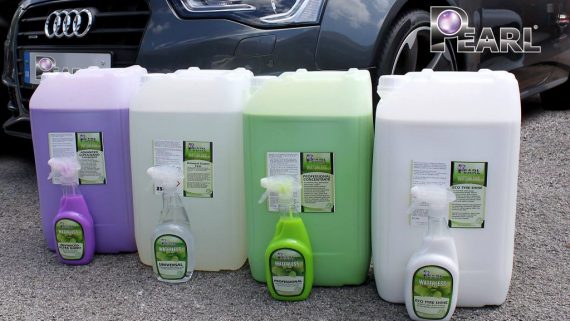
Pearl’s core business is the manufacture and supply of bulk concentrated waterless formulations used in vehicle cleaning and detailing operations worldwide.
The relevance to Energy Efficiency Day lies not simply in reduced water consumption, but in the wider efficiencies achieved through system design.
Our Cleaner, Safer and Greener™ technologies have been developed around a simple principle:
Deliver effective cleaning performance whilst reducing resource consumption and minimising unnecessary environmental pressure.
These technologies help to:
- Significantly reduce water consumption
- Reduce wastewater generation
- Eliminate rinse-water runoff associated with conventional washing methods
- Eliminate airborne overspray commonly produced by high-powered pressure-washing equipment
- Reduce dependence on fixed water infrastructure
- Improve efficiency through concentrated formulations
The Cleaner, Safer and Greener™ philosophy extends beyond water reduction alone.
It recognises that environmental responsibility is influenced by multiple interconnected factors, including:
- Water consumption
- Wastewater generation
- Energy demand
- Runoff control
- Transportation efficiency
- Protection of downstream ecosystems
Unlike conventional wash systems, waterless operation requires no rinsing stage, eliminating routine rinse-water runoff while reducing demand on associated water infrastructure.
Because moving, treating, and pumping water all consume energy, reductions in water use can also contribute to broader resource efficiency objectives.
Furthermore, concentrated formulations help reduce transportation weight and improve logistical efficiency, creating additional environmental benefits throughout the supply chain.
As with many sustainability improvements, the greatest benefits occur when responsible outcomes are built directly into the systems people use every day.
Why Energy Efficiency Supports Economic Resilience
Energy efficiency is often viewed through an environmental lens.
However, its benefits extend well beyond sustainability.
Efficient systems can help deliver:
- Lower operating costs
- Greater predictability
- Improved resilience
- Reduced resource dependency
- Enhanced competitiveness
This is one reason why governments, businesses, and industries increasingly view efficiency as a strategic priority rather than simply an environmental objective.
In many cases, sustainability and economic performance are no longer competing goals.
They are becoming increasingly aligned.
Looking Beyond One Day
While Energy Efficiency Day falls on a single date in the calendar, the questions it raises remain relevant throughout the year.
Over time, systems reveal:
- How efficiently resources are used
- Where waste occurs
- How resilient operations truly are
- Whether efficiency is built into routine activities
- How effectively organisations adapt to changing conditions
Understanding this shifts the discussion away from isolated initiatives and towards the practical reality of how everyday systems influence long-term environmental outcomes.
Reflection Rather Than Prescription
Energy Efficiency Day is not about advocating a single technology, product, or solution.
It is about recognising that long-term sustainability is shaped by the countless systems people interact with every day.
The most sustainable organisations are often those that continually question how efficiently resources are used, where inefficiencies exist, and how performance can be maintained whilst reducing waste.
Efficiency is rarely about doing less.
It is about achieving the same outcomes more intelligently.
As environmental pressures, resource demands, and energy challenges continue to evolve, the importance of efficiency is likely to become even greater.
Because ultimately, long-term sustainability is not determined by isolated actions alone.
It is shaped by the systems that quietly operate in the background every day.
Pearl Quality Standards – engineered properly from the start.

British manufacturing you can trust, partnering with domestic and international customers to deliver sustainable growth and lasting success.
© Pearl Global Ltd — ISO‑Certified British Manufacturing Excellence in Processes, Systems and Product Quality Standards
All Pearl products are engineered using safe, sustainable, environmentally responsible formulations, designed for professional performance with minimal environmental impact. Manufactured exclusively in the United Kingdom and available worldwide in 25L, 205L, and 1000L IBC formats, alongside a full range of premium Nano Ceramic coatings, detailing systems, and specialist maintenance solutions.
For product support or commercial trade enquiries, contact: sales@pearlgloballtd.com | +44 (0)845 874 0140
Stay updated — Subscribe to the Pearl Official Newsletter for product releases, ecological insights, and global business updates.
Pearl Official Channels & Resources
Pearl FAQ – Your central hub for answers to the most common questions about Pearl products, technologies, manufacturing standards, and global distribution.
Pearl Official YouTube – Explore demonstrations, application tutorials, product walk‑throughs, and professional detailing techniques.
Pearl Official Instagram – Discover visual highlights, partner showcases, behind‑the‑scenes content, and professional detailing results.
Pearl Official Facebook – Follow us for updates, product insights, partner news, and global waterless car care innovations.
Pearl Official X – Stay informed with quick updates, industry news, technical insights, and global announcements.
Pearl Official Pinterest – Browse collections of eco‑friendly detailing solutions, product features, and inspirational automotive care visuals.