From Environment to Standard – Governing Vehicle Care at Scale
How waterless vehicle care enables consistent, repeatable standards across complex operations.
Managing vehicle care across multiple sites places sustained demands on teams and operations. Those demands do not come from cleaning itself, but from how processes fragment, exceptions multiply, and responsibility becomes local rather than consistent.
What appears manageable at a single site often becomes fragile when repeated across locations, regions, and operating conditions. Controls increase, workarounds emerge, and oversight becomes harder rather than simpler.
This article examines why traditional vehicle care resists standardisation, and how waterless vehicle care supports a different operating model — one built on consistency, repeatability, and confidence by design. It builds on earlier analysis of designing risk out of vehicle care operations, examining where risk persists, and how operating environments influence performance.
Why Traditional Vehicle Care Resists Standardisation
In many organisations, vehicle care has evolved to suit local conditions rather than organisational intent. Processes are shaped by available infrastructure, drainage arrangements, and site‑specific interpretation of requirements.
Over time, this leads to familiar patterns:
- Site‑specific wash facilities
- Local drainage and interceptor systems
- Variable discharge permissions
- Inconsistent training and supervision
- Localised workarounds and exceptions
Each site may appear compliant in isolation. Across the organisation, however, control becomes fragmented. Oversight depends on local knowledge rather than a consistent system, and variation becomes difficult to eliminate.
This is not a failure of management or intent. It is a structural consequence of introducing water into the cleaning process.
Once water is used, contamination is mobilised. From that point onward, organisations must manage where it goes, how it is treated, and who is responsible downstream. Those responsibilities vary by location, which makes true standardisation difficult to achieve.
Where Control Breaks Down at Scale
The limitations of fragmented processes rarely appear immediately. What appears manageable at a single site often becomes fragile when repeated across locations, regions, and operating conditions. They surface as operations grow:
- When new sites are added
- When activities expand across regions
- When regulatory requirements change
- When audits increase in frequency
- When responsibility shifts between teams
At this stage, control becomes reactive rather than designed. Policies require local interpretation. Training differs by site. Assurance depends on individuals rather than processes.
Vehicle care begins to feel difficult to manage, not because it is inherently complex, but because the operating model cannot be applied consistently.
Why Removing Water Changes the Operating Model
Waterless vehicle care removes the dependency that drives this variation: rinse water.
Without water:
- There is no runoff to manage
- No effluent pathway to monitor
- No discharge permissions to interpret
- No drainage infrastructure to maintain
- No interceptor systems to audit
What remains is a process rather than an infrastructure‑dependent system.
This distinction is critical. Infrastructure varies from site to site. Processes can be standardised.
By removing water from the vehicle care process, organisations gain the ability to define one method that works consistently across locations, regardless of layout, surface, or geography.
From Local Compliance to Organisational Assurance
Traditional vehicle care often relies on local compliance. Someone at each site understands the system, manages the infrastructure, and interprets requirements.
As operations scale, this approach becomes fragile.
Waterless vehicle care enables a shift from relying on local interpretation to operating with organisational assurance. Because the process itself removes the source of environmental exposure, confidence no longer depends on site‑specific controls or individual expertise. It is built into the method.
This marks a fundamental change in how vehicle care can be managed across complex organisations.
Standardisation Without Exception Handling
True standardisation is not achieved through policy alone. It is achieved by reducing the need for exceptions.
Waterless vehicle care enables:
- One operating procedure
- One training approach
- One compliance expectation
- One audit framework
- One consistent risk profile
There is no need to assess drainage suitability, interceptor capacity, or site‑specific discharge rules. The process remains the same.
This removes one of the most persistent and costly challenges in multi‑site operations: exception management.
Training, Oversight, and Repeatability
When a process is genuinely standardised, training becomes simpler and more effective. Operators learn one method. Supervisors oversee one process. Auditors assess one standard.
This leads to:
- Repeatable training outcomes
- Consistent oversight
- Predictable performance
- Clear accountability
Operational confidence increases as complexity decreases.
Why This Matters for Growing and Regulated Organisations
For organisations operating across multiple sites, regions, or regulatory frameworks, consistency is not a convenience. It is a requirement.
Waterless vehicle care supports this by enabling:
- Uniform implementation of standards
- Simplified audit preparation
- Reduced oversight burden
- Fewer points of failure
- Clear lines of responsibility
This is not simply about cleaning vehicles differently. It is about operating with greater certainty as organisations grow.
From Capability to Confidence
At this stage in the evolution of waterless vehicle care, capability is no longer the question. Performance has been demonstrated, and operational advantages are well understood.
What organisations now seek is confidence.
Confidence that every site operates to the same standard.
Confidence that risk is not reintroduced elsewhere.
Confidence that consistency is maintained as operations scale.
By removing water from the process, organisations remove the dependency that creates variation and complexity. What remains is a system that can be applied consistently, managed centrally, and trusted at scale.
Designing Consistency Into the System
The most resilient systems are not those with the most controls. They are the ones that require the fewest.
By eliminating rinse water from vehicle care operations, organisations remove the dependency that forces local interpretation, exception handling, and variation. What remains is a process designed for consistency.
That is the difference between managing vehicle care and designing consistency into the system.
Pearl Quality Standards – engineered properly from the start.
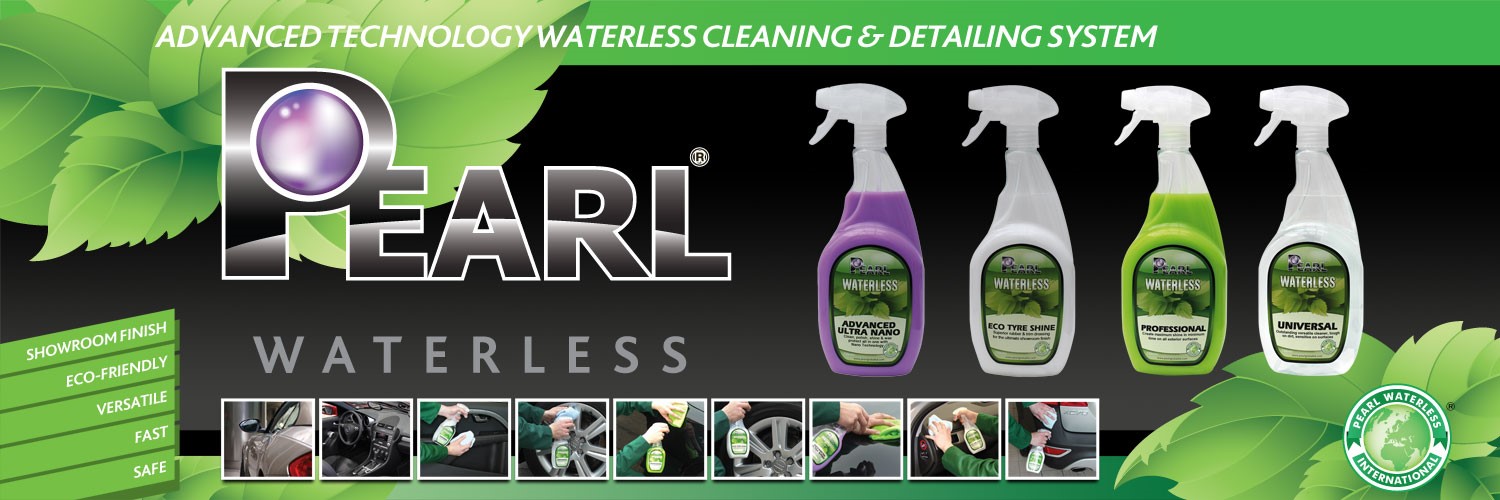
British manufacturing you can trust, partnering with domestic and international customers to deliver sustainable growth and lasting success.
© Pearl Global Ltd — ISO‑Certified British Manufacturing Excellence in Processes, Systems and Product Quality Standards
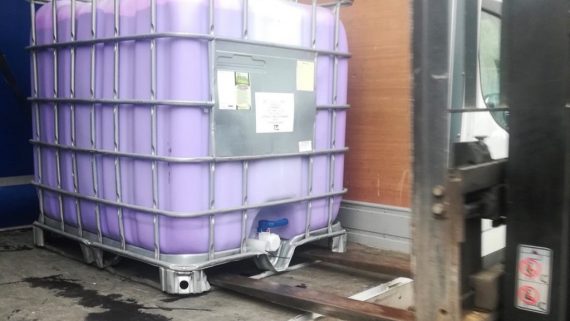
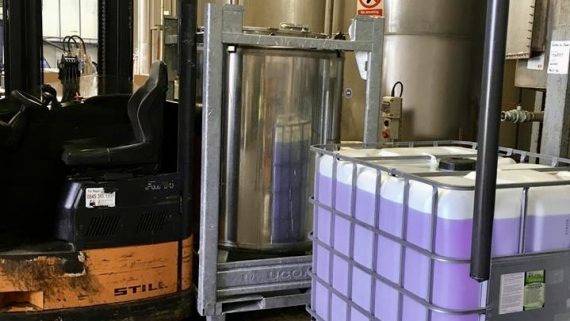
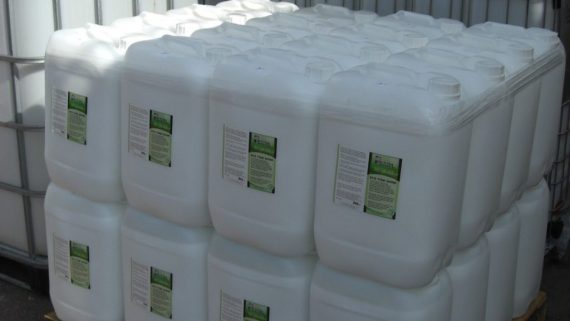
All Pearl products are engineered using safe, sustainable, environmentally responsible formulations, designed for professional performance with minimal environmental impact. Manufactured exclusively in the United Kingdom and available worldwide in 25L, 205L and 1000L IBC formats, alongside a full range of premium Nano Ceramic coatings, detailing systems and specialist maintenance solutions.
For product support or commercial trade enquiries, contact: sales@pearlgloballtd.com | +44 (0)845 874 0140
Stay updated — Subscribe to the Pearl Official Newsletter for product releases, ecological insights and global business updates.
Pearl Official Channels & Resources
Pearl FAQ – Your central hub for answers to the most common questions about Pearl products, technologies, manufacturing standards and global distribution.
Pearl Official YouTube – Explore demonstrations, application tutorials, product walk‑throughs and professional detailing techniques.
Pearl Official Instagram – Discover visual highlights, partner showcases, behind‑the‑scenes content and professional detailing results.
Pearl Official Facebook – Follow us for updates, product insights, partner news and global waterless car care innovations.
Pearl Official X – Stay informed with quick updates, industry news, technical insights and global announcements.
Pearl Official Pinterest – Browse collections of eco‑friendly detailing solutions, product features, and inspirational automotive care visuals.