Where Waterless Vehicle Care Delivers Real Operational Advantage
As waterless vehicle care becomes established at commercial manufacturing scale, the conversation inevitably moves beyond whether the approach works to a more practical and commercially relevant question:
Where does waterless vehicle care deliver the greatest operational advantage?
For professional operators, the value of waterless systems is no longer theoretical. It is most clearly revealed in environments where traditional washing introduces friction through infrastructure dependency, downtime, regulatory exposure, and process inconsistency.
This article examines those environments in detail, focusing not on products but on how removing water from the process reshapes day‑to‑day operations.
This progression builds directly on earlier work examining the transition from traditional washing to scalable, waterless systems, including:
From Niche to Necessity: Redefining Vehicle Care Without Water
Manufacturing Built for Scale
Operational Advantage Begins Where Infrastructure Becomes a Constraint
Traditional vehicle washing was designed around assumptions that no longer hold universally true: reliable access to water, fixed wash bays, drainage infrastructure, and the tolerance for downtime.
In many modern operating environments, those assumptions introduce more complexity than value.
Waterless vehicle care removes water from the equation entirely, and in doing so, eliminates the dependencies that constrain throughput, consistency, and compliance.
The operational advantage is therefore not abstract. It is structural.
Fleet & Logistics Operations
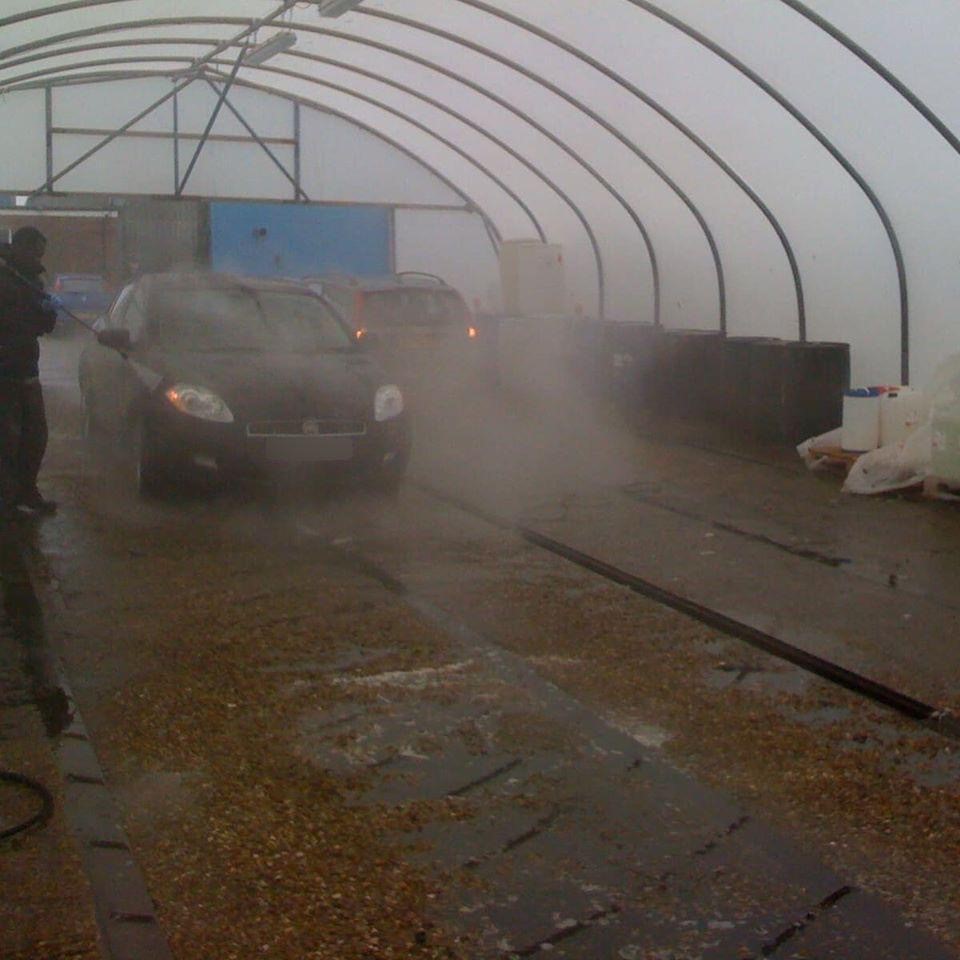 High‑volume fleet environments operate under constant pressure to maximise vehicle availability, consistency of presentation, and turnaround speed. Every process that removes vehicles from service has a direct operational cost.
Traditional washing introduces several points of friction:
- Fixed wash bays that create bottlenecks
- Scheduling constraints around water access
- Vehicle downtime during cleaning
- Wastewater handling and discharge obligations
In contrast, waterless vehicle care removes these dependencies.
Vehicles can be cleaned and protected on‑site, without wash bays, water supply, or drainage infrastructure. Cleaning can take place alongside existing operational activity, rather than displacing it.
The operational outcomes are tangible:
- Faster vehicle turnaround
- Reduced scheduling friction
- Predictable presentation standards across fleets
- Improved utilisation of assets
Critically, this flexibility is only possible because waterless systems are now supported by disciplined manufacturing, consistent chemistry, and scalable supply, as outlined in Manufacturing Built for Scale.
In fleet environments, waterless vehicle care is not a cosmetic improvement – it is a structural efficiency gain.
Dealerships & Forecourts
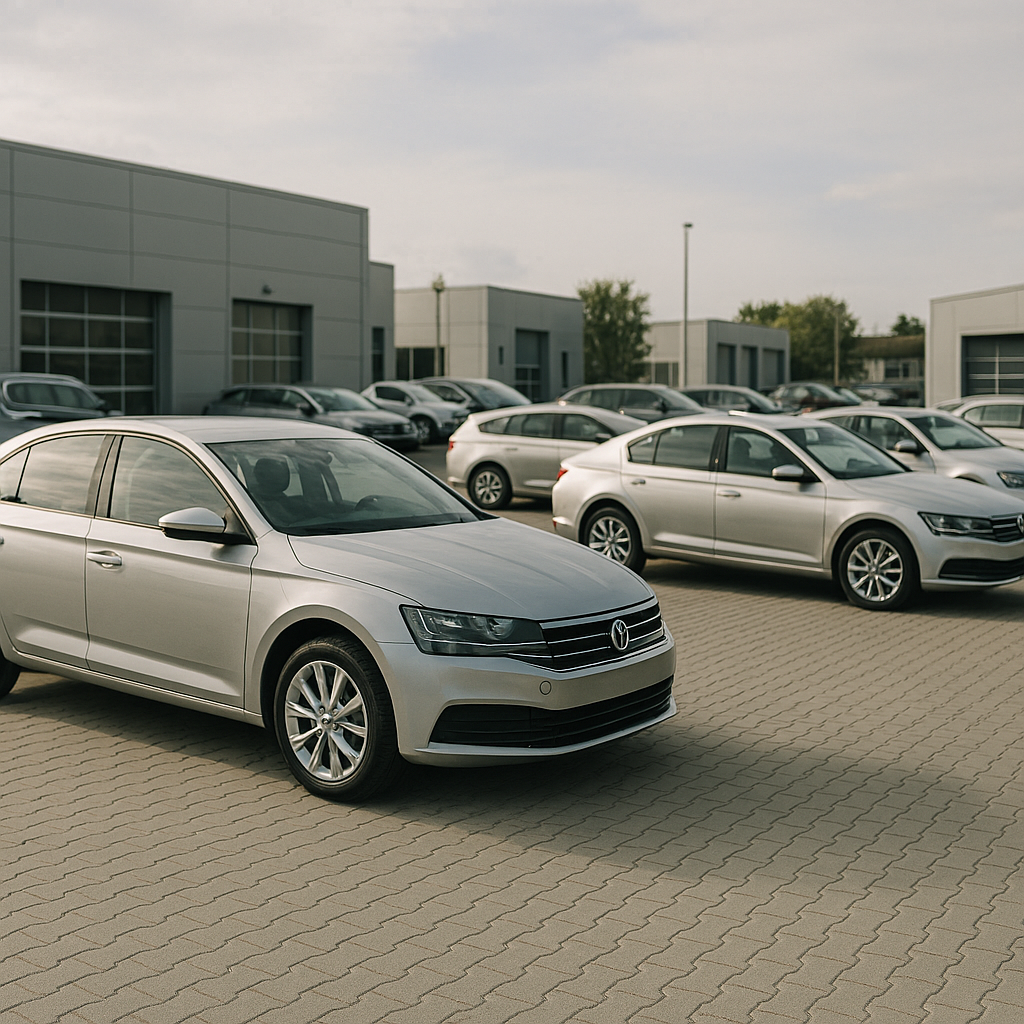 In dealership environments, presentation is inseparable from brand perception. Vehicles must remain showroom‑ready throughout the sales cycle, often under tight timeframes and in highly visible, customer‑facing locations.
Traditional washing creates tension in these environments:
- Water use and runoff restrictions on forecourts
- Drainage and effluent exposure in public spaces
- Reliance on off‑site washing or dedicated wash facilities
- Disruption during peak sales and handover periods
Waterless systems resolve these issues at source.
Cleaning and finishing can take place directly on the forecourt or within display areas, without hoses, standing water, or effluent risk. Premium finishes can be achieved consistently, without aggressive chemistry or infrastructure dependency.
The operational advantages include:
- Continuous presentation readiness
- Simplified compliance in public‑facing spaces
- Reduced reliance on fixed wash infrastructure
- Greater flexibility during high‑volume sales periods
This represents a practical evolution of the sustainability principles explored in Redefining Sustainable Vehicle Care Without Water, where environmental responsibility shifts from managing runoff to preventing it entirely.
In dealership environments, waterless vehicle care aligns operational efficiency with brand integrity.
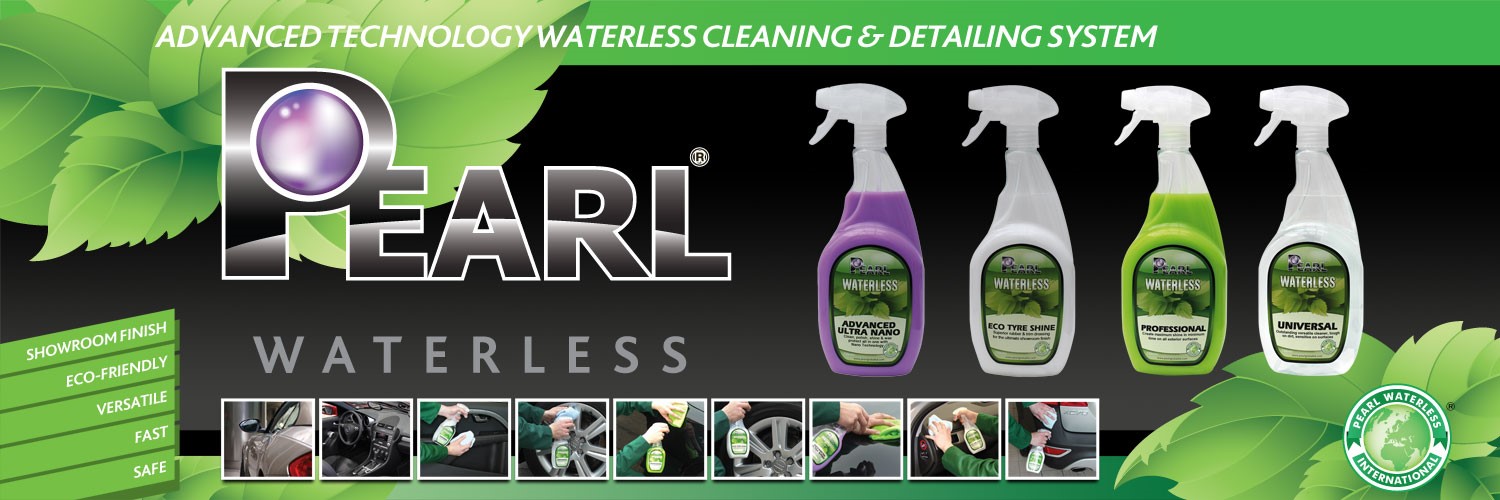
Mobile and Multi‑Site Service Operations
For mobile operators and multi‑site service providers, infrastructure dependence is often the primary constraint on scalability. Access to water, drainage, and power varies by location, introducing inconsistency in both process and outcome.
Traditional washing struggles in these environments because it relies on conditions that cannot be guaranteed.
Waterless vehicle care eliminates these variables.
With no requirement for water supply or drainage infrastructure, services can be delivered wherever vehicles are located, using a repeatable, controlled process that supports standardisation across sites and regions.
The operational implications are significant:
- Consistent service delivery regardless of location
- Simplified training and process control
- Reduced variability between sites
- Improved scalability without additional infrastructure investment
For multi‑site operations, waterless systems enable repeatability, not adaptation – a key distinction for sustainable growth.
The governance and risk implications of removing these dependencies will be explored further in a forthcoming article focused on designing risk out of vehicle care operations.
From Manufacturing Capability to Operational Reality
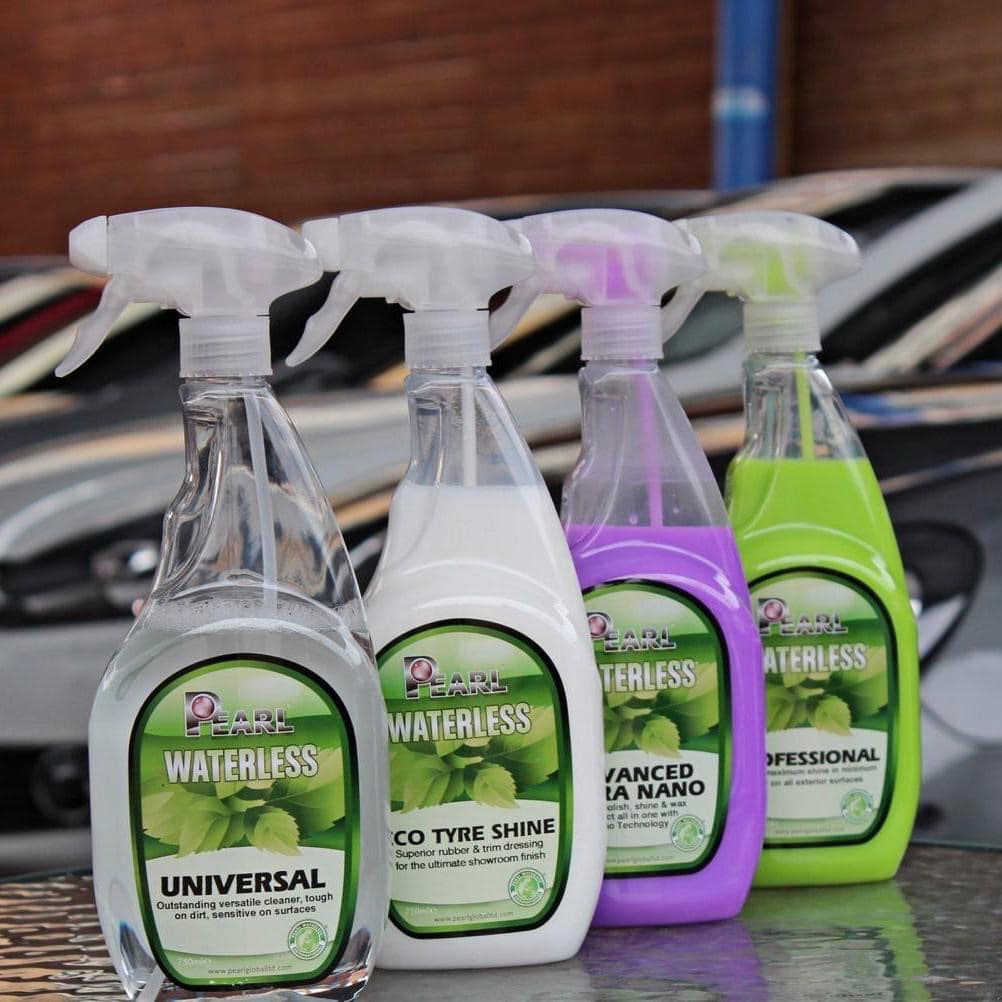 These environments reflect the operational reality for a growing proportion of professional vehicle care activity.
With waterless systems now supported by:
- Accredited manufacturing
- Scalable and reliable supply
- Disciplined chemistry
- Repeatable, auditable processes
Their value is most clearly seen where traditional washing struggles to keep pace with modern operational demands.
The advantage is not theoretical. It is observed daily in environments where:
- Infrastructure limits throughput
- Downtime carries real cost
- Compliance exposure must be managed carefully
- Consistency matters more than speed alone
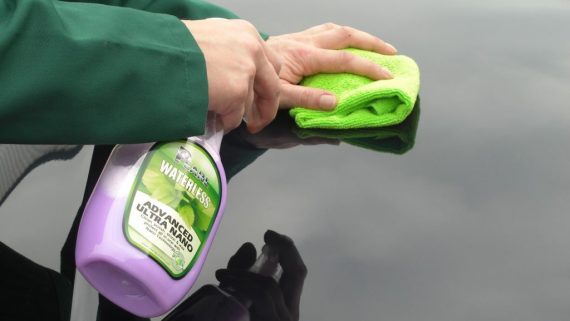
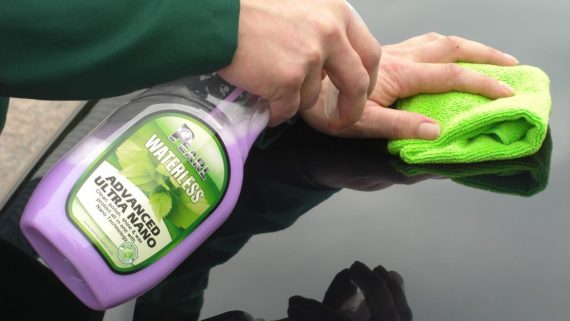
The accompanying material illustrates how these systems perform in live operational environments, delivering premium results without water use, runoff, or environmental compromise.
Pearl Quality Standards – engineered properly from the start.
British manufacturing you can trust, partnering with domestic and international customers to deliver sustainable growth and lasting success.
© Pearl Global Ltd — ISO‑Certified British Manufacturing Excellence in Processes, Systems and Product Quality Standards
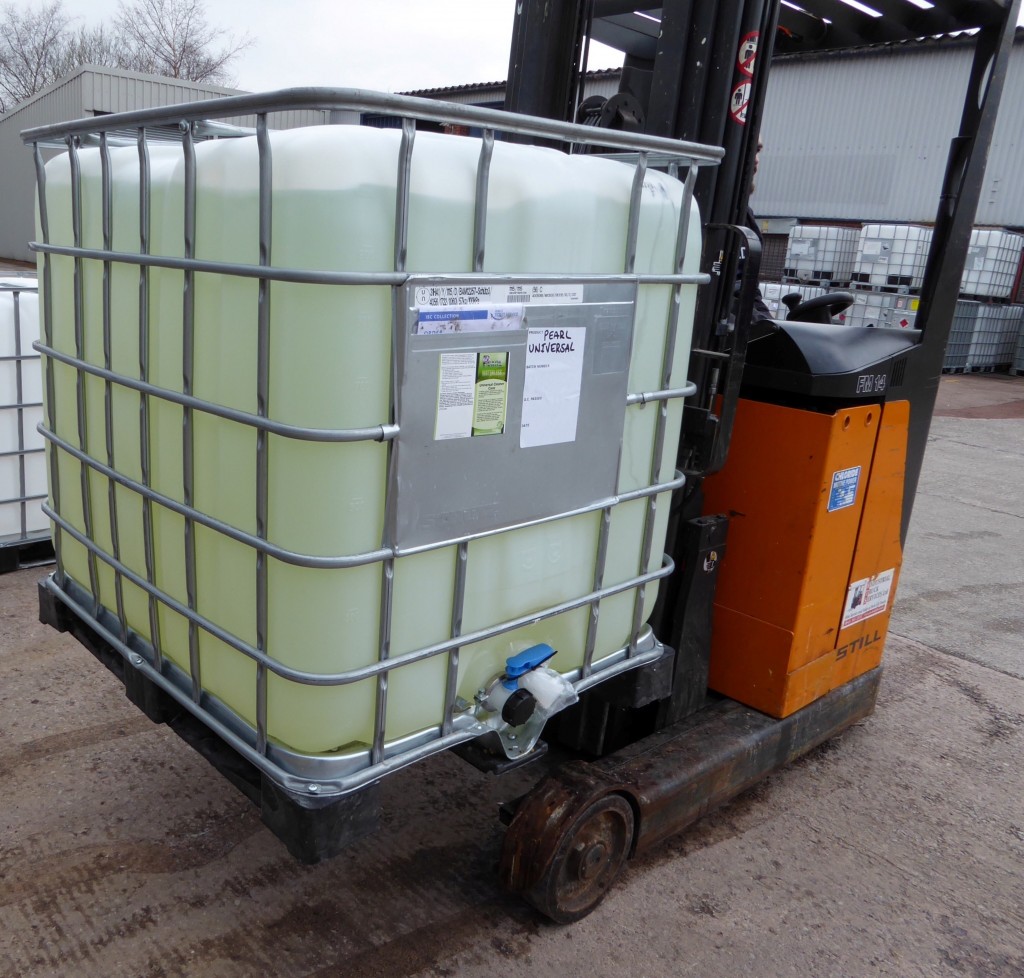
All Pearl products are engineered using safe, sustainable, environmentally responsible formulations, designed for professional performance with minimal environmental impact. Manufactured exclusively in the United Kingdom and available worldwide in 25L, 205L and 1000L IBC formats, alongside a full range of premium Nano Ceramic coatings, detailing systems and specialist maintenance solutions.
For product support or commercial trade enquiries, contact: sales@pearlgloballtd.com | +44 (0)845 874 0140
Stay updated — Subscribe to the Pearl Official Newsletter for product releases, ecological insights and global business updates.
Pearl Official Channels & Resources
Pearl FAQ – Your central hub for answers to the most common questions about Pearl products, technologies, manufacturing standards and global distribution.
Pearl Official YouTube – Explore demonstrations, application tutorials, product walk‑throughs and professional detailing techniques.
Pearl Official Instagram – Discover visual highlights, partner showcases, behind‑the‑scenes content and professional detailing results.
Pearl Official Facebook – Follow us for updates, product insights, partner news and global waterless car care innovations.
Pearl Official X – Stay informed with quick updates, industry news, technical insights and global announcements.
Pearl Official Pinterest – Browse collections of eco‑friendly detailing solutions, product features, and inspirational automotive care visuals.