Redefining Sustainable Vehicle Care Without Water
Designing Pollution Out of the System: The Environmental Case for Waterless Vehicle Care
Environmental responsibility in professional vehicle care has traditionally been framed around compliance – meeting wastewater regulations, installing capture systems and managing chemical disposal. But as environmental pressures intensify worldwide, a more progressive approach is emerging: Eliminating environmental harm at source rather than managing it downstream.
Waterless vehicle cleaning represents a fundamental shift in how environmental impact is addressed – moving from treatment and mitigation to prevention by design.
From Water Management to Ecosystem Protection
Conventional vehicle washing introduces a complex environmental chain reaction. Water used in cleaning does not simply disappear; it becomes a carrier for oils, surfactants, heavy metals, microplastics and road residues. Once mobilised, these contaminants can enter drainage systems, waterways and soils if not carefully captured and treated.
Even in regulated commercial environments, wastewater treatment requires energy, infrastructure, chemical processing and transport – all of which contribute to additional environmental burden.
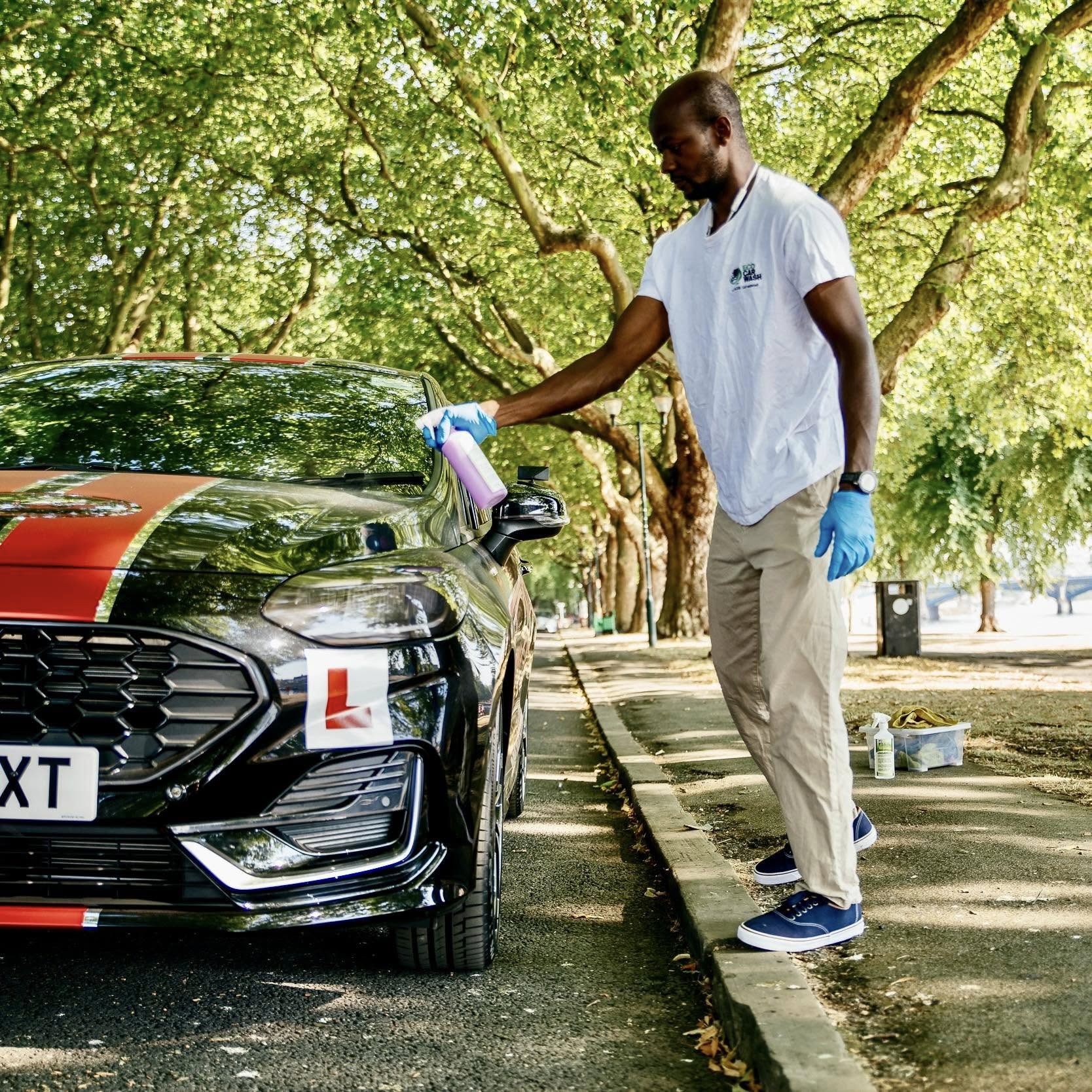 Waterless cleaning systems break this cycle entirely.
By removing water from the cleaning process, it:
- Eliminates contaminated runoff
- Prevents pollutant transfer into stormwater systems
- Avoids downstream aquatic toxicity
- Reduces pressure on municipal treatment facilities
This shift delivers benefits far beyond water conservation – It directly protects rivers, groundwater, soils and coastal ecosystems.
Preventing Chemical and Micro-Pollution at Source
Vehicle washing is a recognised contributor to non‑point source pollution. Brake dust, tyre residue, oils and detergents contain compounds that persist in the environment and accumulate in aquatic food chains.
Waterless systems prevent this exposure pathway entirely. Contaminants are captured mechanically within microfibre materials rather than dispersed into water systems. This means:
- No surfactants entering waterways
- No hydrocarbon residue migrating into soil
- No microplastics are washed into rivers and oceans
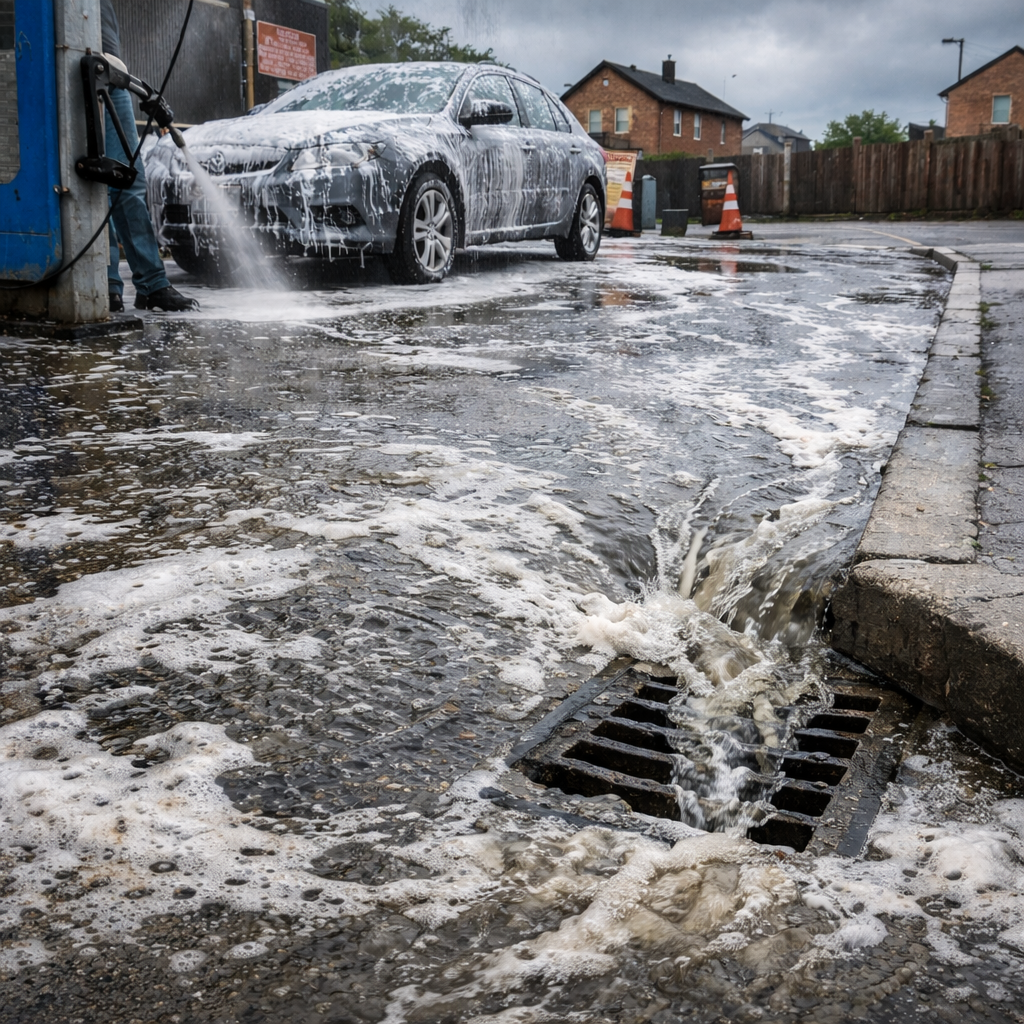 In environmental terms, this is a containment‑based solution, not a dilution‑based one – an important distinction as regulators move away from “acceptable discharge” models toward zero‑pollution frameworks.
Energy Reduction and Carbon Footprint Impact
Environmental impact is not limited to water alone. Traditional vehicle washing requires:
- Pumping and pressurising water
- Heating in some systems
- Wastewater treatment and recycling
- Transport and disposal of liquid waste
Each stage consumes energy and contributes to carbon emissions.
Waterless vehicle care significantly reduces this footprint by:
- Removing the need for water heating and pumping
- Eliminating energy‑intensive treatment processes
- Reducing transport emissions associated with liquid waste removal
- Enabling decentralised, mobile operations with minimal equipment
When scaled across fleets, dealerships or commercial operations, these reductions translate into measurable carbon footprint improvements – supporting broader climate and net‑zero objectives.
Resilience in Water‑Stressed Regions
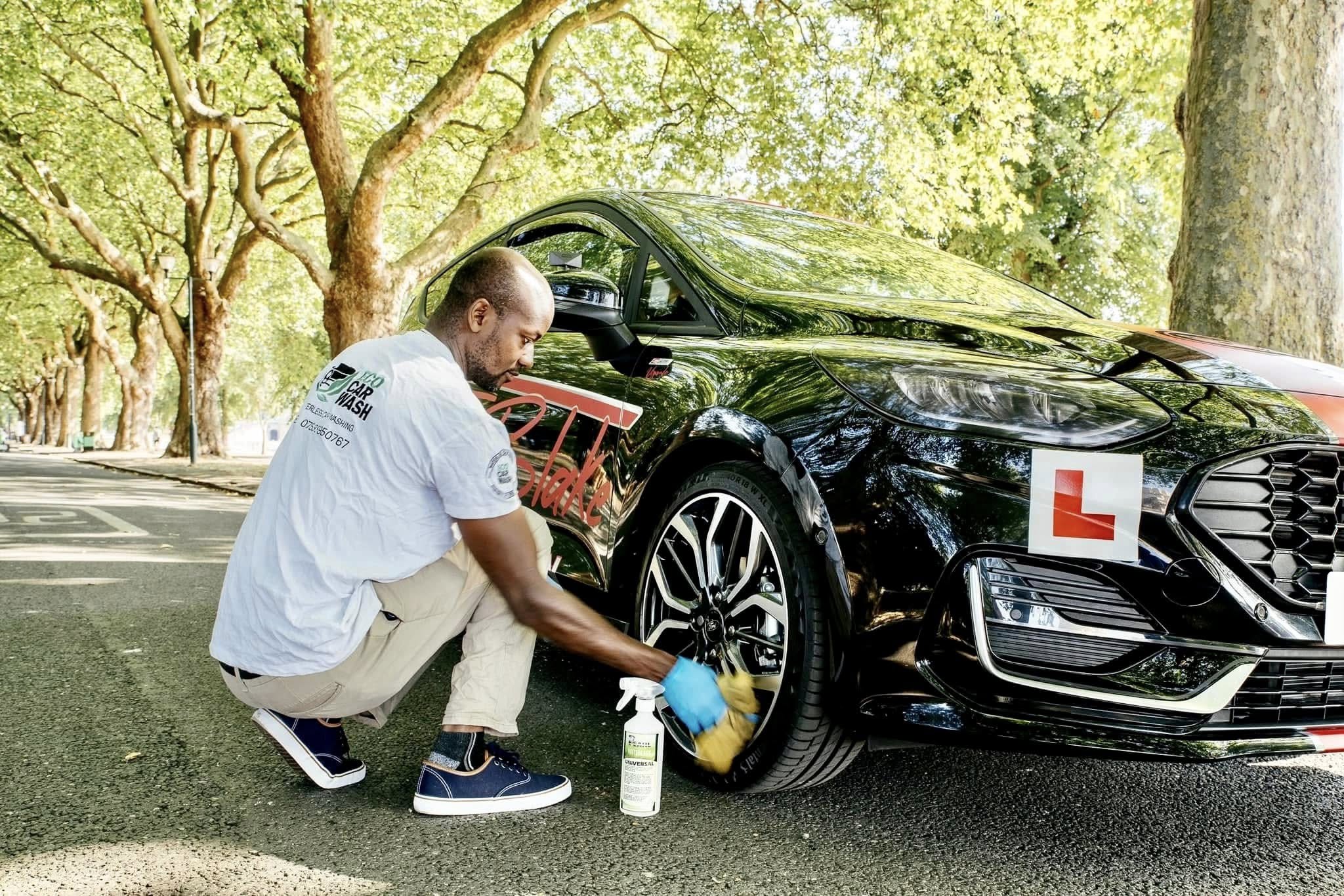 Water scarcity is now a defining global environmental challenge. In many regions, water use for vehicle washing is restricted or prohibited altogether during drought periods. These measures are no longer temporary – they reflect a long‑term recalibration of how water is prioritised.
Waterless vehicle care enables continued service delivery without competing for potable water resources, supporting:
- Urban water resilience
- Agricultural water security
- Community drought response efforts
By decoupling vehicle care from water consumption, businesses align themselves with responsible water stewardship – an increasingly critical environmental expectation worldwide.
Reducing the Environmental Burden of Compliance Infrastructure
While wastewater treatment systems are essential for traditional operations, they come with their own environmental cost:
- Construction materials
- Chemical processing inputs
- Sludge generation
- Maintenance emissions
- End‑of‑life disposal
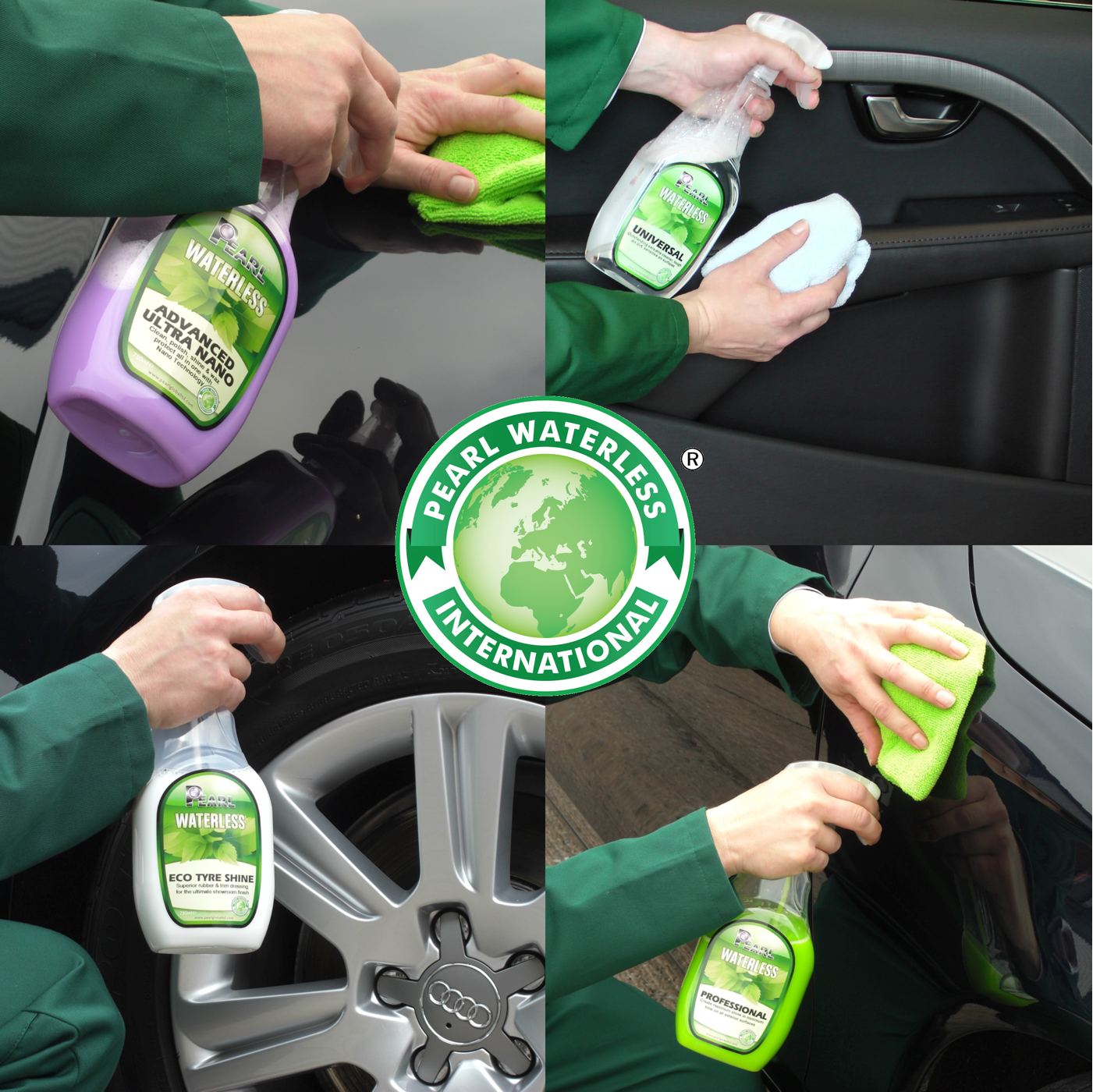 Waterless systems remove the need for this infrastructure altogether. Fewer systems, fewer materials, fewer emissions, and a smaller environmental footprint across the entire lifecycle of the operation.
This represents a shift from impact management to impact avoidance, which is increasingly recognised as the most effective sustainability strategy.
A Nature‑Aligned Model for the Future
As environmental legislation tightens and climate risks accelerate, industries are being challenged to operate in closer alignment with natural systems rather than against them.
Waterless vehicle care embodies this philosophy:
- No extraction of scarce water resources
- No chemical burden is placed on ecosystems
- No pollution transferred downstream
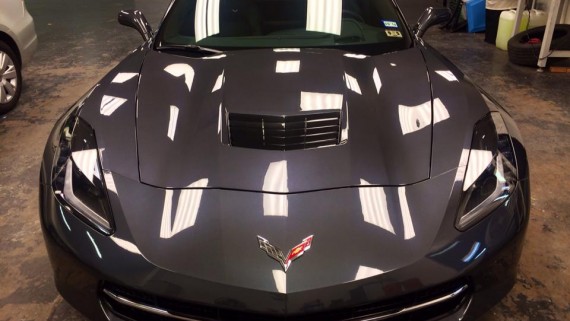
- No compromise in performance or finish quality
It is a solution designed not merely to comply with regulation, but to anticipate the future direction of environmental governance.
Leading the Transition to Climate‑Positive Auto Care
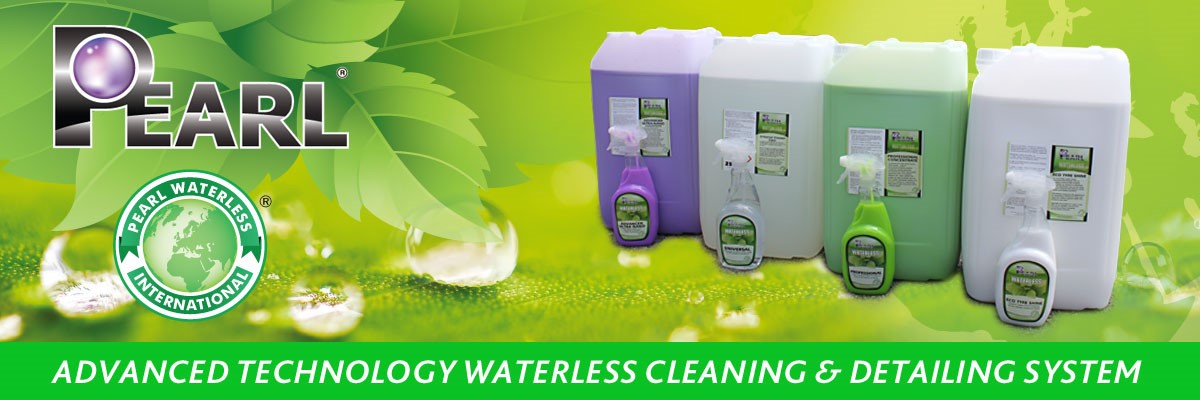
At Pearl Global Ltd, sustainability is engineered into every aspect of product design. Our high‑performance waterless cleaning, detailing and protection systems enable businesses to dramatically reduce water use, energy consumption, carbon impact, and eliminate effluent pollution – without sacrificing professional results.
As the automotive care sector evolves, those who design environmental responsibility into their operations today will define the standards of tomorrow.
The future of vehicle care is not about cleaning more – it is about impacting less.
Pearl Quality Standards – engineered properly from the start.
British manufacturing you can trust, partnering with domestic and international customers to deliver sustainable growth and lasting success.
© Pearl Global Ltd — ISO‑Certified British Manufacturing Excellence in Processes, Systems and Product Quality Standards
All Pearl products are engineered using safe, sustainable, environmentally responsible formulations, designed for professional performance with minimal environmental impact. Manufactured exclusively in the United Kingdom and available worldwide in 25L, 205L and 1000L IBC formats, alongside a full range of premium Nano Ceramic coatings, detailing systems and specialist maintenance solutions.
For product support or commercial trade enquiries, contact: sales@pearlgloballtd.com | +44 (0)845 874 0140
Stay updated — Subscribe to the Pearl Official Newsletter for product releases, ecological insights and global business updates.
Pearl Official Channels & Resources
Pearl FAQ – Your central hub for answers to the most common questions about Pearl products, technologies, manufacturing standards and global distribution.
Pearl Official YouTube – Explore demonstrations, application tutorials, product walk‑throughs and professional detailing techniques.
Pearl Official Instagram – Discover visual highlights, partner showcases, behind‑the‑scenes content and professional detailing results.
Pearl Official Facebook – Follow us for updates, product insights, partner news and global waterless car care innovations.
Pearl Official X – Stay informed with quick updates, industry news, technical insights and global announcements.
Pearl Official Pinterest – Browse collections of eco‑friendly detailing solutions, product features, and inspirational automotive care visuals.